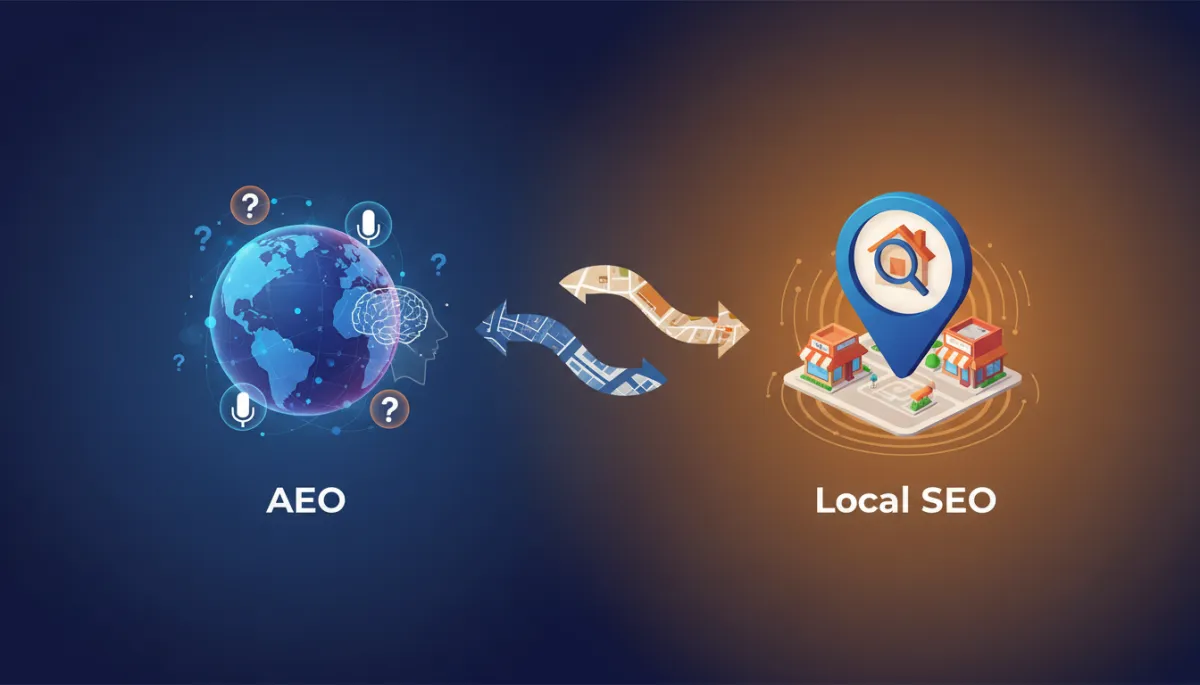
AEO vs Local SEO: Lead Generation Guide
AEO, Local SEO, Lead Generation, Small Business Marketing
What Is AEO vs Local SEO? A Strategic Guide for Lead-Driven Businesses
If you run a small or medium-sized business—or lead marketing for one—you already know that ranking in Google is not enough. You need to be found, trusted, and chosen across search, maps, and now AI assistants. That is where understanding AEO vs local SEO becomes a strategic advantage for lead generation and revenue growth.
Direct Answer: AEO vs Local SEO in One View
Answer Engine Optimization (AEO) is the practice of structuring and optimizing your content so that AI systems and search engines can extract direct, trustworthy answers to user questions. It is about visibility in featured snippets, “People Also Ask,” and increasingly in AI overviews and conversational assistants.
Local SEO focuses on making your business discoverable for geographically targeted searches—think “near me” and city or neighbourhood queries—across Google Search, Google Maps, and local directories. It is about driving foot traffic and local leads from people ready to buy in your area.
For growth-focused SMBs and marketing teams, AEO builds topical authority and AI visibility, while local SEO secures transactional intent in your service area. The most effective lead-generation strategies deliberately combine both.
Key Insights for Lead-Generation and Marketing Teams
AEO is the new front door to your expertise in an AI-first search world; local SEO is the front door to your physical or regional presence.
Topical authority now matters as much as proximity and reviews; you must own your niche with strategic content architecture and semantic coverage.
Lead-gen funnels perform best when your content, CRM, and outreach stack are aligned—from digital consultancy strategy to marketing automation and sales follow-up.
AEO: Designing Content for Answers, Not Just Keywords
AEO starts with a simple question: “What would a prospect ask an AI assistant before they ever talk to our sales team?” Then you build structured, authoritative content that answers those questions clearly and concisely, while supporting deeper exploration for serious buyers.
Use clear H2/H3 question-based headings and concise, direct answers underneath.
Build semantic clusters—pillar pages supported by detailed subtopics—to demonstrate depth and expertise, not just surface-level coverage.
Align content with a clearly defined content marketing strategy so every article has a role in your funnel: attract, educate, convert, or nurture.
AI assistants increasingly aggregate and summarize from multiple sources. If your content is not structured for extraction—and does not clearly demonstrate expertise, authority, and trust—you will be summarily dismissed while competitors win the mention and the click.
Local SEO and GEO: Owning Your Service Area
Local SEO is no longer just “set up Google Business Profile and hope.” High-performing local brands treat it as a GEO (geographic) operating system—a repeatable process for discovery, trust, and choice in specific territories. Frameworks like the Local Visibility Operating System formalize this into checklists and workflows that marketing teams can scale across locations.
Meticulous NAP consistency (name, address, phone) and category selection across profiles and directories.
Review acquisition and response systems integrated into your CRM and social media workflows—supported by tools and services like strategic social media management.
Geo-specific landing pages and content that speak to local problems, regulations, and context—not just city names stuffed into generic copy.
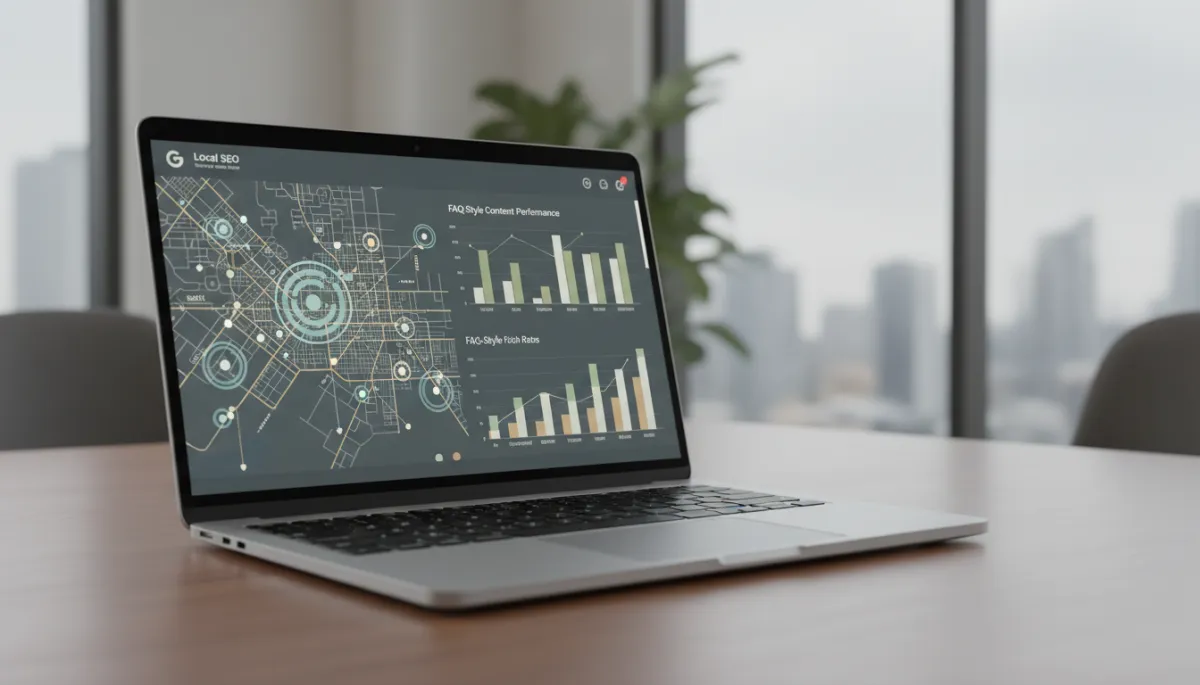
Businesses combining AEO and local SEO often see 20–40% more qualified leads.
Real-World Example: From Generic Rankings to Qualified Leads
A regional home services company ranked decently for “[service] + city” but struggled with lead quality. By reframing their strategy around AEO and GEO:
We built an FAQ-driven knowledge hub answering over 80 buyer questions, structured for AI and featured snippets.
We deployed geo-targeted pages for each service area, supported by a CRM and automation stack powered by GoHighLevel, along with lead workflows similar to MagnoPro.
Within six months, organic traffic grew 38%, but more importantly, phone-qualified leads increased by 52%. The difference was not more content; it was better-structured, intent-aligned content plugged into a conversion-focused tech stack, including GoHighLevel trials, AI features, and implementation bootcamps.
Contrarian Insight: Stop Chasing “Near Me” and Start Owning Questions
Many local businesses obsess over “near me” keywords and map pack positions. Necessary, yes—but incomplete. The decision is often made before that search, when prospects are researching problems, solutions, and costs. If you only optimize for local intent, you enter the conversation too late and become a commodity.
AEO lets you influence thinking earlier: “What is the ROI of [service]?” “How long does [solution] take?”, “Is [approach] worth it for small businesses?” That is where trust and pricing expectations are shaped. Strategic teams map these questions into content roadmaps, often formalized during sessions such as a dedicated marketing strategy session or a content strategy intensive.
One of the most significant shifts occurring in search is the movement from discovery to recommendation. AI systems increasingly reduce the number of options presented to users, creating a winner-takes-most dynamic in many local markets. Businesses that establish authority, trust, and topical depth today are positioning themselves to become recurring recommendations rather than simply competing for rankings.
Data, Evidence, and the Role of Automation
Industry studies consistently show that featured snippets and rich results can capture 8–20% more clicks than standard blue links for the same set of queries.
Google reports that nearly half of all queries have local intent; pairing local visibility with answer-focused content compounds the impact rather than splitting efforts.
Businesses that integrate CRM, automation, and AI into their funnel—using tools like GoHighLevel upgrades and annual plans—consistently report higher lead-to-opportunity conversion rates.
The pattern is clear: AEO and local SEO perform best when paired with disciplined follow-up and automation—whether through your own systems or platforms like GoHighLevel SaaS and focused lead engines such as LeadMagno demos.
FAQs: AEO vs Local SEO for SMBs
Do I need AEO if I only serve one city?
Yes. Your prospects still ask research questions long before they search “[service] near me.” AEO ensures your expertise is visible in those early-stage queries and AI answers.
Is AEO just schema markup?
No. Schema helps, but AEO is primarily about how you structure and write content so answers are clear, extractable, and backed by authority.
Where should I start if resources are limited?
Start with a focused plan: one local hub page, one high-intent FAQ hub, and a clear follow-up system. A specialized digital consultancy partner can help you prioritize the highest-impact plays first.
Why This Matters Financially
Businesses that appear during the research phase often influence purchasing decisions before competitors enter the conversation. By establishing authority through answer-focused content and local trust signals, organizations can improve conversion rates, reduce price sensitivity, and generate higher-quality leads without increasing advertising spend.
Future Outlook: Search Becomes Recommendation Infrastructure
Over the next several years, search engines and AI assistants will increasingly function as recommendation systems rather than information directories. Users will receive fewer choices and more direct recommendations based on trust, expertise, customer experience, and relevance. Businesses that invest in authority-building today will be better positioned as recommendation-driven discovery becomes the dominant search model.
Entity Authority Becomes the New Ranking Factor
Historically, SEO rewarded websites. Increasingly, AI systems reward entities. An entity is not just your website—it is your business, your brand, your expertise, your reviews, your authors, your services, and your digital footprint across the web. As AI assistants become more sophisticated, they will rely less on individual pages and more on entity-level trust signals when deciding which businesses to recommend. Companies that actively strengthen their entity authority today are creating a long-term competitive advantage that extends far beyond traditional search rankings.
The False Choice Between AEO and Local SEO
Many businesses mistakenly view AEO and local SEO as competing priorities. In reality, they support different stages of the customer journey. AEO influences prospects during research and consideration, while local SEO captures demand when prospects are ready to engage. Organizations that integrate both strategies create a stronger and more resilient lead-generation engine.
Executive Insight: The Businesses AI Recommends Will Win More Than Traffic
One of the most important strategic shifts happening today is the move from search results to recommendations. AI assistants increasingly provide a shortlist of trusted providers instead of presenting dozens of options. This creates a winner-takes-more environment in which visibility becomes concentrated among businesses with strong authority, reviews, expertise, and customer-satisfaction signals. The future challenge for leadership teams is not simply to rank higher—it is to become one of the few businesses AI consistently recommends.
AEO and Local SEO Maturity Model
Most businesses progress through four stages:
Stage 1: Visibility – Basic website, Google Business Profile, and service pages.
Stage 2: Optimization – Reviews, structured content, local citations, and conversion tracking.
Stage 3: Authority – Topic clusters, answer-focused content, automated review generation, and strong local reputation.
Stage 4: Recommendation – AI citations, answer engine visibility, entity authority, and automated lead nurturing systems.
The businesses dominating local markets over the next five years will increasingly operate at Stage 4.
The Rise of the AI Recommendation Economy
As AI assistants become primary discovery tools, businesses will compete for recommendations rather than clicks. This creates an entirely new layer of competition where trust, authority, customer experience, and structured information determine visibility. Organizations that consistently publish authoritative content, maintain strong reviews, and build recognizable brands will gain disproportionate exposure as AI systems narrow consumer choices to a handful of recommended providers.
AEO + Local SEO Revenue Framework
The most effective businesses view AEO and Local SEO as a complete revenue framework rather than separate marketing tactics. AEO creates awareness and trust during the research phase, Local SEO captures high-intent buyers in specific geographic markets, and CRM automation converts that demand into measurable revenue. When these systems work together, businesses create a self-reinforcing growth engine where content generates visibility, visibility generates leads, and automation turns leads into customers.
Final Strategic Takeaway
AEO vs local SEO is not an either–or decision. For modern small and medium businesses, it is a stacked strategy: AEO builds your authority with search engines and AI assistants; local SEO translates that authority into local visibility and revenue. The winners in the next three years will be those who design content, geography, and technology as one integrated system—supported by clear strategy, disciplined execution, and the right tools.


