Effective AI-Driven Marketing Strategies 2026
AI Marketing, Digital Strategies, Data-driven Marketing
AI‑Driven Digital Marketing Strategies That Actually Work in 2026
AI Marketing has moved from shiny experiment to everyday engine of growth. For agencies and in‑house teams, the question is no longer “Should we use AI?” but “Which AI‑driven digital strategies actually move revenue, not just vanity metrics?” This guide breaks down proven, AI‑powered approaches to Digital Strategies, Automated Campaigns, Targeted Advertising, SEO Tactics, and Customer Engagement that are working for businesses in 2026.
What Is AI Marketing in 2026? (Direct Answer)
AI Marketing in 2026 uses machine learning, generative models, and agentic AI systems to plan, execute, and optimize campaigns in real time with minimal manual input. These systems make thousands of micro‑decisions—bids, audiences, creatives, and timing—based on live performance data and predictive analytics instead of marketer guesswork.
In one line: AI Marketing is automated decision‑making for campaigns, powered by real‑time data rather than human guesswork.
Best AI‑Driven Digital Marketing Strategies in 2026 (Quick Summary)
Use agentic AI to automate campaign targeting, bidding, and creative testing end‑to‑end.
Use predictive Targeted Advertising with first‑party and zero‑party data to build high‑intent audiences.
Use hyper‑personalized Customer Engagement across email, SMS, social, and on‑site experiences.
Optimize content for AEO and GEO to earn citations inside AI answer engines.
Enforce data governance and integrate systems so every AI decision is backed by clean, privacy‑safe data.
If you want faster scaling: lean on automated, agentic campaigns.
If you want better lead quality: focus on predictive audiences and AEO/GEO‑optimized content.
Why AI‑Driven Digital Marketing Matters Now
In 2026, AI is no longer an add‑on; it is the operating system of effective digital marketing. Agentic AI systems now plan, launch, and optimize entire Automated Campaigns with minimal human input, from creative testing to bid strategies and budget allocation.[1] Platforms like Google’s Gemini for Ads and Meta’s Advantage+ have turned Targeted Advertising into a dynamic, always‑on optimization loop rather than a set‑and‑forget task.[1]
At the same time, brands are under pressure to prove ROI, respect privacy, and maintain authenticity. That makes Data-driven Marketing essential: every decision, from Content Optimization to channel mix, needs to be grounded in Data Analytics, not gut feel. The good news is that AI gives both agencies and businesses the tools to do exactly that—if you deploy it strategically and with governance in mind.[2],[3]
💡 Pro Tip: Treat AI as your co‑pilot, not your autopilot. The most successful teams pair automated execution with human judgment, brand guardianship, and clear business goals.
1. Agentic AI and Automated Campaigns That Actually Perform
Agentic AI—autonomous systems that can plan and run campaigns end‑to‑end—is the defining AI Marketing trend of 2026.[1],[4] Instead of manually configuring dozens of ad sets, audiences, and bid strategies, marketers increasingly hand these tasks to AI agents that:
Generate and rotate creative variations across channels
Allocate and reallocate budgets based on real‑time performance data
Adjust bids and placements to hit target CPA, ROAS, or pipeline goals
According to IAB’s 2026 outlook, over two‑thirds of brands now prioritize agentic AI for ad buying and campaign execution.[4] Yet a major execution gap remains: many teams use AI for insights but not for full workflow orchestration.[5] That gap is an opportunity. Agencies and businesses that lean into AI‑driven Marketing Automation gain speed, scale, and consistent performance advantages.
If you want faster scaling: use agentic AI to run always‑on, multi‑channel campaigns.
If you want tighter control: set strict guardrails and keep humans in the loop for approvals.
How to Deploy AI‑Powered Automated Campaigns Safely
Define clear guardrails. Set budget caps, brand safety rules, and conversion goals before handing control to AI. This ensures Automated Campaigns stay aligned with your risk tolerance and profitability thresholds.
Feed quality data. Agentic AI is only as smart as the signals it receives. Connect first‑party CRM data, offline conversions, and high‑quality event tracking so the system can optimize toward real business outcomes, not just clicks.[3]
Monitor and iterate. Shift your team’s role from manual tweaking to AI supervision. Review performance weekly, adjust prompts and constraints, and feed back learnings into your broader Digital Strategies.
📌 Key Takeaway: The winning formula is AI‑driven execution plus human strategic oversight. Businesses that cling to manual campaign management will struggle to compete on speed and efficiency.
2. Data-Driven Targeted Advertising and Predictive Audiences
Third‑party cookies are fading; zero‑party and first‑party data are in. AI‑powered Targeted Advertising now revolves around consent‑based signals—preferences, behaviors, and declared interests that customers willingly share.[1],[3] AI models transform these signals into predictive audiences, scoring each user’s likelihood to buy, churn, or upgrade in real time.
What is replacing third‑party cookies? First‑party and zero‑party data are now the foundation of modern targeting.
Look‑alike is out; look‑forward is in. Instead of simply mirroring your best customers, predictive models forecast who will become your best customers in the next 30–90 days based on behavior and intent patterns.
Dynamic creative and offers. AI tools adjust messaging, offers, and even creative layout on the fly according to audience segment, device, and stage of the funnel.[2],[6]
The result is Targeted Advertising that feels less like surveillance and more like service: relevant, timely, and value‑driven. For agencies, this is a chance to reposition media buying from “we place ads” to “we design predictive growth systems.”
If you want better lead quality: invest in predictive scoring and segment‑specific offers.
💡 Pro Tip: Start by building one predictive audience—such as “likely to purchase in 14 days”—and tailor an AI‑generated nurture journey just for them. Prove ROI, then scale to more segments.
3. Hyper‑Personalized Customer Engagement Across the Journey
Hyper‑personalization is no longer a buzzword; it is baseline. Nearly half of marketers already use AI to create personalized content, with over 90% reporting better performance from targeted experiences.[6] In practice, this means AI‑driven Customer Engagement across email, SMS, social, and on‑site experiences that adapts to each individual’s context and intent.
If you want higher retention: use AI to trigger lifecycle messages before customers disengage.
Practical Examples of AI‑Powered Customer Engagement
Smart lifecycle flows. AI tools predict when a customer is at risk of churning and trigger retention campaigns—discounts, educational content, or concierge support—before they disengage.
Conversational assistants. Advanced chatbots and virtual assistants can now resolve complex queries, recommend products, and even upsell based on emotional cues and historical Data Analytics.[7]
On‑site personalization. Website layouts, hero messages, and calls‑to‑action shift in real time based on visitor segment, traffic source, and predicted intent.
⚠️ Warning: Over‑automation can backfire. Forrester warns that one‑third of brands deploying customer‑facing generative AI too quickly will damage trust through clumsy experiences.[8] Always keep a human‑escalation path and monitor satisfaction scores.
4. Content Optimization, GEO, and Answer Engine Optimization (AEO)
SEO Tactics are being rewritten. With AI‑powered answer engines like ChatGPT, Perplexity, and Google’s AI Overviews, ranking #1 on a keyword is less important than being cited as a trusted source within AI‑generated answers.[1],[9] This has given rise to Answer Engine Optimization (AEO) and Generative Engine Optimization (GEO).
If you want more AI citations: structure content around clear questions and concise, factual answers.
AEO focuses on structuring content to directly answer specific, high‑intent questions in clear, concise formats that AI models can easily parse.[1],[9]
GEO emphasizes semantic depth, topical authority, and consistent citations across your content ecosystem so generative models view your brand as an authoritative source.[9]
For agencies building a content marketing strategy, this means moving beyond keyword stuffing to a holistic Content Optimization approach: comprehensive topic clusters, structured FAQs, schema markup, and clear sourcing. AI models reward clarity, coverage, and credibility.
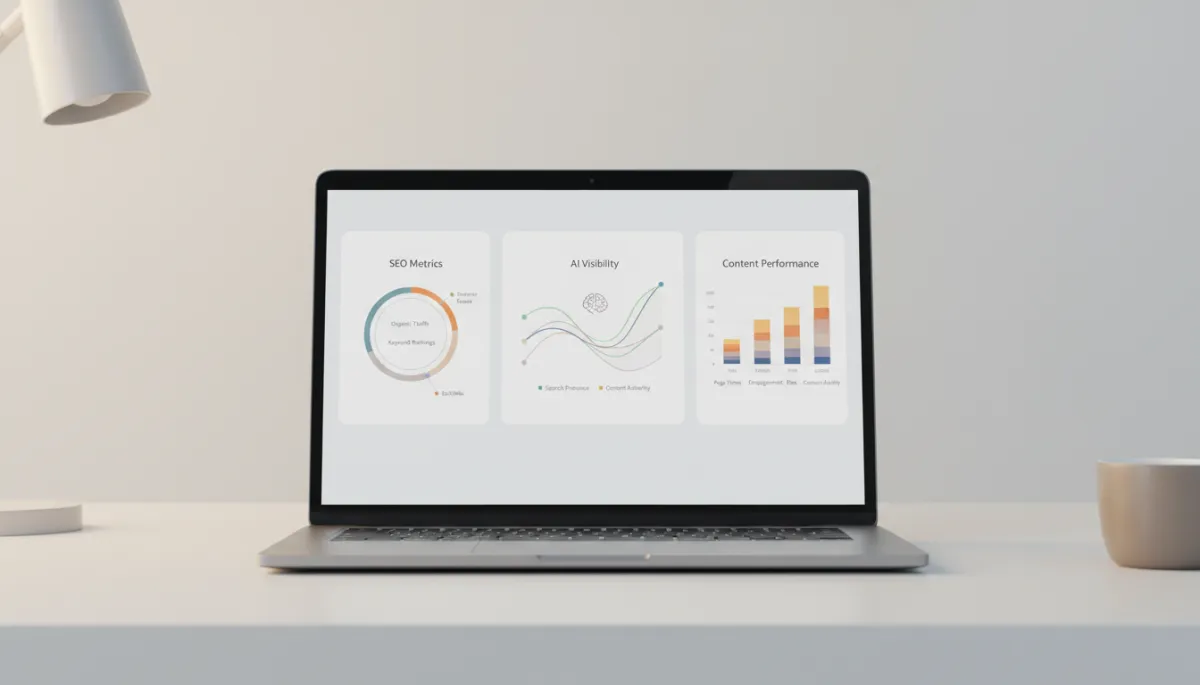
Structured, authoritative content is increasingly cited by AI answer engines, driving compound visibility.
Actionable SEO Tactics for the AI Era
Build long‑form, expert content that fully answers a topic, then layer in concise summaries and FAQs for AEO visibility.
Use AI tools to identify “people also ask”‑style questions and incorporate them into your articles with clear, direct responses.
Monitor how AI agents reference your brand and competitors, then adjust your SEO Tactics and thought‑leadership content to fill gaps.[1],[9]
5. Social Media, Creators, and AI‑Powered Content at Scale
Social media remains a growth engine, with ad spend on social, CTV, and commerce media projected to rise double digits in 2026.[4] But the way brands win on social has changed. Instead of a few “hero” campaigns, AI enables high‑volume, high‑diversity content testing—hundreds of creative variations tailored to micro‑segments and formats.[4],[10]
If you want more winning creatives: use AI to generate many variations, then double down on top performers.
AI‑assisted creative. Generative tools help repurpose one core idea into multiple short‑form videos, carousels, and stories, each optimized for specific platforms and audiences.[7]
Creator and UGC pipelines. Authentic creator content outperforms polished brand assets, especially when amplified with AI‑driven targeting and testing.[6],[11]
If you manage or advise on social, pairing AI Marketing tools with a robust social media marketing strategy lets you implement Data-driven Marketing: test, learn, and scale what works based on real engagement and conversion data, not just impressions.
💡 Pro Tip: Use AI to generate “first drafts” of social content and captions, but always pass them through a human editor to maintain brand voice and avoid generic AI tone.
6. Data, Governance, and System Integration: The Real Competitive Edge
Behind every impressive AI case study is something less glamorous: clean, well‑governed data and integrated systems. Experian notes that AI’s impact depends heavily on data quality, transparency, and privacy‑safe activation.[3] Yet only a small fraction of marketers report fully unified ad‑tech stacks.[5]
For agencies and businesses alike, this is where strategic digital consultancy becomes invaluable. Before layering on more tools, you need to:
Audit your current data sources, tracking, and consent flows
Consolidate or connect key systems (CRM, analytics, ad platforms, email)
Define a measurement framework that ties AI‑driven activity to pipeline, revenue, and retention
📌 Key Takeaway: AI Marketing is not about stacking more tools; it is about orchestrating the right tools around a single source of truth for your data.
7. Ethics, Authenticity, and Trust in AI‑Generated Experiences
As AI‑generated content floods feeds and inboxes, audiences are becoming more skeptical. Gartner highlights authenticity and content trust as central to future marketing, especially with deepfakes and misinformation on the rise.[11] Meanwhile, Brandwatch reports that “authentic and spontaneous” content is one of the most important trends, as consumers tune out overly polished, obviously automated posts.[10]
Responsible AI use is now a brand differentiator. The most resilient brands:
Disclose AI‑generated content where appropriate and avoid deceptive practices
Maintain strict review processes, especially for sensitive topics or regulated industries
Invest in AI governance frameworks and red‑teaming to check models for bias and harmful outputs[12]
💡 Pro Tip: Pair every AI‑generated asset with a simple checklist: brand voice, factual accuracy, source verification, and compliance. This keeps speed without sacrificing trust.
8. Putting It All Together: A Symmetrical AI Marketing Framework
To turn these trends into a practical roadmap, think of AI‑driven Digital Strategies as a symmetrical framework with four pillars—each mirrored by a supporting capability:
Acquire: AI‑optimized Targeted Advertising, SEO Tactics, and AEO/GEO visibility
Mirrored by: Data Analytics and attribution models that quantify true acquisition cost and quality.Engage: Hyper‑personalized Customer Engagement journeys and conversational AI support
Mirrored by: Unified customer profiles and lifecycle measurement to track engagement health.Convert: AI‑driven Marketing Automation for lead scoring, sales enablement, and CRO testing
Mirrored by: Revenue analytics and experimentation frameworks to validate uplift.Grow: Predictive retention, upsell, and cross‑sell models powered by first‑party data
Mirrored by: Governance and ethical AI practices that sustain long‑term trust and brand equity.
Whether you are an agency building AI Marketing services or a brand modernizing your own stack, this symmetry keeps your strategy balanced: automation on one side, accountability on the other.
FAQs: AI‑Driven Digital Marketing Strategies for 2026
1. What is AI Marketing in 2026, and how is it different from traditional digital marketing?
AI Marketing uses machine learning, generative AI, and agentic AI systems to plan, execute, and optimize digital campaigns with minimal manual input. Unlike traditional digital marketing, where humans configure every ad set and email flow, AI‑driven Digital Strategies rely on algorithms to make thousands of micro‑decisions in real time—bids, creatives, segments—based on Data Analytics and predictive models.[1],[4],[7]
2. Which AI‑driven strategies actually move the needle for businesses and agencies?
The most consistently effective tactics include:
Agentic AI for Automated Campaigns across search, social, and CTV
Predictive Targeted Advertising using first‑party and zero‑party data
Hyper‑personalized Customer Engagement journeys and content recommendations
Content Optimization for AEO and GEO to improve visibility in AI answer engines
These strategies work best when supported by strong data infrastructure and clear measurement frameworks.[1],[3],[4]
3. How can smaller businesses or lean agencies start with AI Marketing without huge budgets?
You do not need an enterprise budget to get value from AI. Start with:
Built‑in AI features in ad platforms (e.g., Advantage+ campaigns, smart bidding)
AI copy and creative assistants for faster Content Optimization and testing
Simple Marketing Automation workflows—abandoned cart, re‑engagement, lead nurturing—powered by behavior triggers
As you see ROI, reinvest in deeper Data Analytics, predictive modeling, and cross‑channel orchestration, ideally guided by a trusted digital consultancy partner.
4. How does AI impact SEO Tactics and content strategy?
AI has shifted SEO from pure keyword ranking to holistic visibility. Brands now need to optimize for human readers, search engines, and AI answer engines simultaneously. That means:
Creating authoritative, well‑structured content that answers questions comprehensively
Using clear headings, FAQs, and schema to improve AEO and GEO performance[1],[9]
Monitoring how AI tools reference your brand and adjusting your content marketing strategy to fill knowledge gaps
5. What are the biggest risks of AI‑driven digital marketing?
The main risks include:
Poor data quality leading to bad decisions or biased targeting[3],[12]
Over‑automation that frustrates customers and damages trust[8]
Compliance and privacy issues if consent and governance are not handled carefully
You can mitigate these risks by investing in governance, maintaining human oversight, and partnering with specialists who understand both AI and regulatory requirements.
6. How do we measure the ROI of AI‑driven digital strategies?
Start by defining a clear baseline: your current acquisition costs, conversion rates, and retention metrics. Then, when you deploy AI‑driven tactics—whether Automated Campaigns, predictive audiences, or Content Optimization—measure:
Incremental lift in conversions or revenue versus control groups
Changes in CAC, ROAS, LTV, and payback period
Operational savings (hours saved, reduced manual work) from Marketing Automation
Modern attribution and model‑driven analytics are evolving to better capture AI’s impact across channels, making it easier to justify continued investment.[2],[5]
Final Thoughts: Building a Future‑Ready AI Marketing Engine
AI‑Driven Digital Marketing is no longer about chasing the latest tool. It is about designing a coherent, Data-driven Marketing ecosystem where AI amplifies your strategy, your team, and your brand values. The businesses and agencies that win in 2026 will be those that:
Embrace agentic AI and Marketing Automation for execution, while keeping humans in charge of direction and ethics
Invest in clean data, integrated systems, and robust measurement to power true Data Analytics
Treat Content Optimization, AEO, and GEO as core SEO Tactics—not afterthoughts
Prioritize authenticity, customer consent, and long‑term trust in every AI‑assisted interaction
If you want AI to be a competitive advantage: pair automation with governance, and speed with clear business outcomes.
If you are ready to turn AI from buzzword into bottom‑line impact, consider partnering with experts who can help you architect the right mix of strategy, technology, and governance. With the right foundation, AI Marketing becomes more than a trend—it becomes your competitive advantage for the next decade and beyond.
References
Visalytica, “AI Marketing 2026: Orchestration & Measurement Evolution.”
Experian, “Digital Trends: Data Quality and Privacy‑Safe Activation.”
IAB via PR Newswire, “2026 Outlook Study: Agentic AI and Ad Spend Growth.”
Mediaocean via GlobeNewswire, “2026 Advertising Outlook: The AI Execution Gap.”
Forbes Technology Council, “The Future of AI in Marketing: 2026 and Beyond.”
Aeotics & SearchEngineProjects, “Top AI Marketing Trends & Generative Engine Optimization 2026.”


