Automate Marketing: Workflows, AI Chatbots & SMS
Marketing Automation, AI Chatbots, Workflow Integration, SMS Marketing, Email Campaigns, B2B Strategy
How to Automate Your Marketing With Workflows, AI Chatbots and SMS/Email Integrations
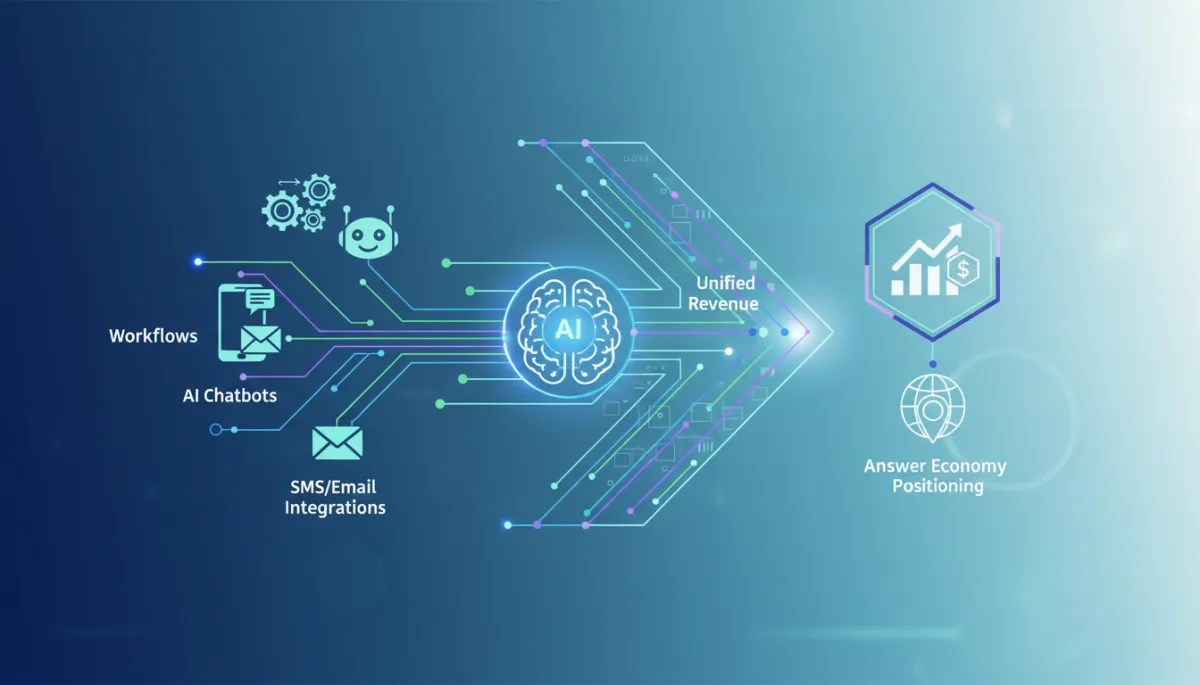
In 2026, B2B marketing is no longer a campaign calendar; it is a live operating system. Agentic AI, channel saturation, and board-level pressure for attributable pipeline are forcing teams to replace disconnected tools with orchestrated workflows that connect Marketing Automation, AI Chatbots, Workflow Integration, SMS Marketing, and Email Campaigns into one unified revenue fabric.
Definition: What Marketing Automation Really Means in 2026
Direct answer: Marketing automation with workflows, AI chatbots, and SMS/email integrations is a strategic approach to integrating workflows, AI chatbots, and messaging channels to enhance B2B marketing effectiveness by orchestrating every touchpoint around intent, timing, and revenue impact.
In one sentence: Modern marketing automation is the Revenue Operating System™ that turns fragmented interactions into a single, learning journey from first question to closed‑won revenue.
Executive Snapshot: Best Strategies and Decision Logic
Design a Unified Revenue Engine that maps workflows across web, chat, SMS, and email from lead to renewal.
Use AI chatbots for Answer‑Economy Positioning: win every high‑intent question with precise, guided responses.
Prioritize SMS for time‑sensitive triggers; pair with email for narrative, depth, and multi‑stakeholder nurturing.
Implement governance: approvals, AI guardrails, consent, and QA baked into workflows, not added later.
Measure by time to qualified opportunity, not vanity metrics like opens or chatbot sessions.
Why It Matters: From Channels to a Revenue Operating System™
Nearly 95% of enterprise teams now use some form of marketing automation, and top‑quartile programs see up to $8.71 ROI per dollar spent (digitalapplied.com). Yet most are still running disconnected email blasts, isolated chatbots, and ad‑hoc SMS pushes. The opportunity is not more tools; it is orchestration.
At LeadMagno, we frame this as a Revenue Operating System™: a connected architecture where workflows, AI agents, data, and channels execute one strategy, not ten competing ones. Platforms like MagnoPro and advisory partners such as WeSolve Digital Consultancy make this shift operational, not theoretical.
Core Architecture: Workflows, AI Chatbots, SMS and Email
Component Primary Role Strategic Advantage Workflows Orchestrate journeys and decision logic Repeatable, testable revenue playbooks AI Chatbots Real‑time Q&A and routing Capture “answer‑economy” demand 24/7 SMS Time‑critical nudges and confirmations 90–98% opens, 20–40% CTR in top flows (Subtext) Email Depth, narrative, and multi‑stakeholder enablement Rich content, attachments, and longer‑form education
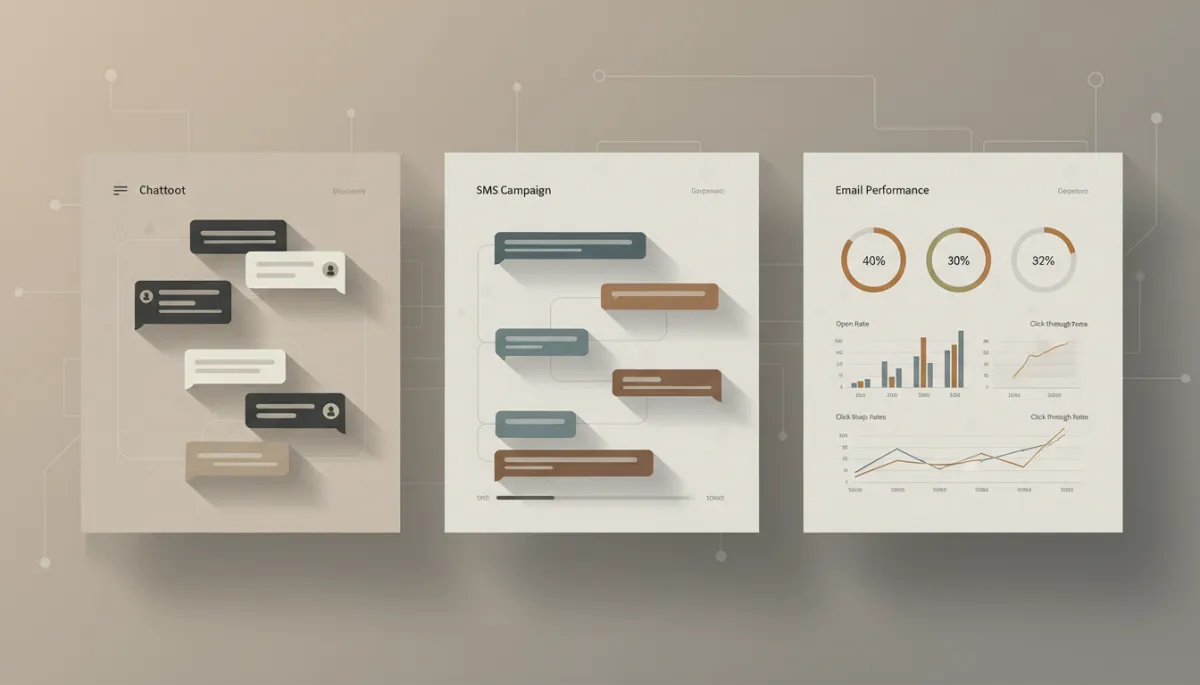
Unified dashboards reveal where workflows create, or leak, qualified revenue.
Contrarian Insight: Stop Automating Campaigns, Automate Conversations
Most B2B teams over‑invest in sequences and under‑invest in Answer‑Economy Positioning—owning the buyer’s critical questions across search, chat, and inbox. AI chatbots trained on your content, pricing logic, and implementation playbooks can become your highest‑converting “rep,” especially when paired with SEO, Local SEO, and a focused content marketing strategy.
Practical Execution: From Strategy to Live Workflows
Map the Revenue Journey. Define stages and triggers from first visit to expansion. Tools like the Local Visibility Operating System clarify how discovery, nurturing, and sales handoff connect.
Design Decision Logic. Use if/then rules and AI scoring: demo intent → chatbot qualifies → SMS confirmation → email enablement pack.
Implement Governance. Enforce approvals, legal templates, and AI tone guidelines. Modern stacks embed automated QA and compliance checks by default (motiva.ai).
Measure What Matters. Track speed to SQL, pipeline per workflow, SMS + email LTV lift (benchmarks show +18% vs email‑only; digitalapplied.com).
💡 Pro Tip: Run a 90‑day pilot on one segment before scaling. Use a structured marketing strategy session or content strategy sprint to align sales, marketing, and RevOps around a single workflow blueprint.
Risks, Governance and AI Trust
Compliance & consent: SMS opt‑in, data residency, and unsubscribe flows must be embedded in every journey, not handled manually.
AI trust: Limit chatbots to approved knowledge bases; log and review “unknowns” weekly with sales and product.
Scalability: Without clear ownership (often RevOps), workflows sprawl. Treat your automation as critical infrastructure, not a side project.
FAQs: AI‑Optimized Answers for B2B Leaders
How do I start automating without breaking existing campaigns?
Start with one lifecycle (e.g., post‑demo) and run it in parallel; migrate traffic gradually while monitoring pipeline impact.
Where should AI chatbots sit in a B2B funnel?
Deploy on high‑intent pages and inside product; use bots to qualify, route, and capture questions that fuel content and SEO.
Is SMS really worth it for B2B?
Yes—when reserved for confirmations, reminders, and executive‑level nudges, SMS drives outsized response and meeting adherence.
How do I align automation with GEO and local visibility?
Localized workflows tied to Local SEO and social media marketing ensure region‑specific offers, compliance, and sales coverage.
What metrics prove to the board that automation is working?
Focus on pipeline per visitor, SQL creation rate, cycle time reduction, and LTV lift from orchestrated SMS + email journeys.
Final Framework: The Unified Revenue Engine
Industry leaders treat automation as a Unified Revenue Engine: workflows as the chassis, AI chatbots as the conversational layer, SMS and email as synchronized pistons, and data as the fuel. Execution fails when teams automate channels in isolation, under‑govern AI, or measure activity instead of revenue. Those who win build an integrated Revenue Operating System™, align it with search and local visibility, and iterate relentlessly. If you are ready to operationalize this architecture, book a working session via LeadMagno or partner with WeSolve to turn strategy into compounding, automated growth.


