Future of SEO: AI Search Intent & Lead Generation
SEO, AI Search Intent, Lead Generation, Digital Marketing Strategy
The Future of SEO and AI Search Intent for Lead-Driven Businesses
AI is quietly rewriting the rules of SEO—especially for small and medium businesses that live and die by lead flow. The opportunity is significant if you know where to focus.
1. From Keywords to Intent Clusters
By 2026, search engines will rely even more on AI and machine learning to interpret what a user actually wants, not just what they type. For lead generation, this means ranking goes to brands that map entire intent journeys—problem-aware, solution-aware, and ready-to-buy—rather than chasing isolated keywords.
A structured content marketing strategy should now be built around these intent clusters: educational guides, comparison content, and conversion-focused offers that answer the next logical question in the buyer’s mind.
Search behavior is becoming increasingly conversational. Instead of searching for isolated keywords, users are asking complete questions and expecting direct answers. This shift means businesses must create content that addresses entire topics rather than individual phrases. Brands that build content ecosystems around customer problems, decision criteria, and buying triggers will earn greater visibility in both traditional search results and AI-generated answers.
2. AI as Your Always-On Research Assistant
AI tools already analyze search queries, behavior signals, and competitive content at a level no human team can match. For SMBs, the future is not hiring bigger teams—it is integrating smarter systems. Platforms like GoHighLevel and its AI features help unify SEO, funnels, and follow-up, turning intent data into automated nurturing sequences.
For more advanced setups, upgrading to SaaS mode, exploring the Pro trial, or committing to the annual plan and bootcamp can turn your agency or in‑house team into an intent-driven growth engine.
The most effective use of AI is not content generation alone—it is pattern recognition. AI can identify emerging search trends, content gaps, seasonal demand shifts, and behavioral signals that would otherwise go unnoticed. Businesses that combine AI insights with human expertise can respond faster to market opportunities while producing more relevant and authoritative content.
Executive Diagnostic: Is Your SEO Strategy Ready for AI Search?
Ask yourself the following questions:
Do we know the top questions prospects ask before they contact us?
Is our content organized around customer intent or just keywords?
Can we identify which pages generate qualified leads versus traffic only?
Are our landing pages connected to automated follow-up systems?
Can we measure lead quality from organic search?
If the answer to most of these questions is "no," your biggest SEO opportunity may not be rankings—it may be aligning content with buyer intent.
3. Real-World Example: Local Lead Gen With AI Intent Signals
A regional home services company struggled with volatile lead volume despite ranking for “near me” keywords. Partnering with a digital consultancy, they restructured their SEO around AI-detected intents: “emergency repair now,” “compare options,” and “preventive maintenance.”
They deployed a local visibility operating system to unify Google Business Profile, local content, reviews, and call tracking. On-site content targeted each intent with tailored CTAs, then AI-driven workflows in HighLevel upgrades routed leads into segmented nurture sequences. Within 90 days, organic lead-to-booked-job conversion improved by over 30 percent, without increasing ad spend.
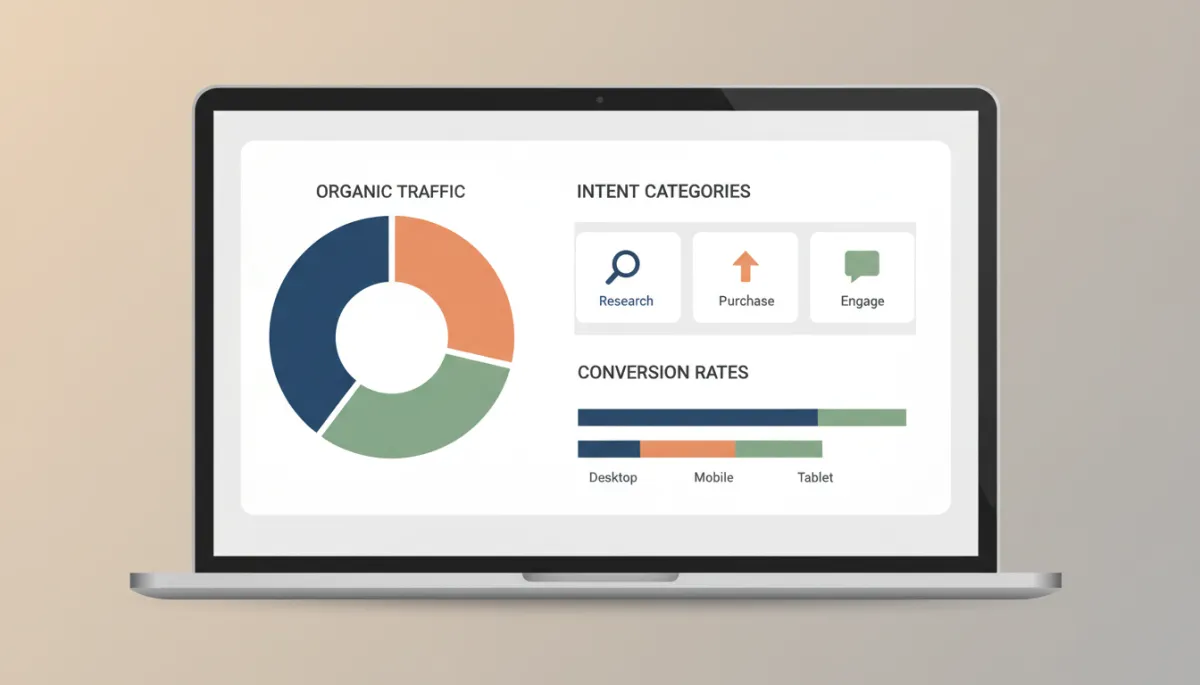
Intent-focused SEO often lifts conversions faster than chasing more traffic.
One of the biggest advantages of intent-driven SEO is efficiency. Rather than publishing large volumes of generic content, businesses can focus on answering the specific questions prospects ask before making a purchase decision. This often results in higher engagement, stronger conversion rates, and better alignment between marketing activity and revenue outcomes.
4. Contrarian Insight: Stop Obsessing Over Rankings Alone
A contrarian but increasingly accurate view—rankings are becoming a vanity metric. With AI-driven personalization, two users rarely see the same results. For lead-generation businesses, the more strategic KPI is qualified pipeline per intent, not average position.
That shifts investment from pure SEO to integrated systems: landing pages built around specific search intents, AI-enhanced follow-up, and omnichannel reinforcement via social media marketing. Tools like MagnoPro and focused content strategy programs help you operationalize this across channels instead of treating SEO as a silo.
Another emerging reality is that visibility now extends beyond search engines. AI assistants, voice search platforms, recommendation engines, and conversational interfaces increasingly determine which brands are discovered. Businesses should therefore optimize not only for rankings, but also for authority, credibility, structured information, and content that AI systems can confidently reference and recommend.
5. Turning AI Search Intent Into a Repeatable System
Audit your funnel by intent stage—where do visitors stall or drop before becoming leads?
Build content for each stage, then connect it to automated nurture in platforms like GoHighLevel.
Layer in AI-driven personalization—dynamic CTAs, intent-based offers, and behavior-triggered follow-up.
If you want external perspective, consider a focused marketing strategy session or a structured digital consultancy engagement to align SEO, content, and automation around revenue, not vanity metrics. You can also book a demo to see how an integrated lead engine behaves when intent data drives every step.
Future Outlook: SEO Becomes a Customer Intelligence System
Over the next several years, SEO will evolve from a traffic-generation discipline into a customer intelligence function. Search data will increasingly reveal buyer concerns, purchase intent, emerging market opportunities, and competitive positioning. Businesses that treat SEO data as a source of strategic insight—not just rankings and clicks—will gain a significant advantage in product development, sales enablement, and marketing performance.
Final Strategic Takeaway
The future of SEO for SMBs and marketing professionals is not about outsmarting algorithms—it is about aligning with them. Treat AI search intent as the backbone of your entire demand engine. When your content, funnels, and follow-up are all built around what prospects genuinely want at each moment, search stops being a cost center and becomes a predictable, compounding source of qualified pipeline.
Frequently Asked Questions
How does AI affect SEO for small businesses?
AI helps search engines better understand user intent and content quality. For small businesses, this means success depends less on keyword repetition and more on creating useful, trustworthy content that answers customer questions.
Will AI replace traditional SEO?
No. AI is changing how SEO works, but the fundamentals remain the same: understanding customer intent, creating valuable content, and building authority. AI simply raises the standard for relevance and usefulness.
What is AI search intent?
AI search intent refers to the underlying goal behind a user's search query. Modern search engines use AI to understand what users actually want to accomplish, allowing them to deliver more relevant results and recommendations.
What should businesses focus on first?
Start by identifying the questions prospects ask before becoming customers. Then create content that answers those questions and connect it to clear calls-to-action, landing pages, and automated follow-up systems.
Visual Framework: From Intent to Revenue
Intent → Content → Conversion → Nurture → Revenue
Use this simple chain as a checklist: every key intent should map to specific content, a clear conversion path, an automated nurture sequence, and measurable revenue outcomes.


