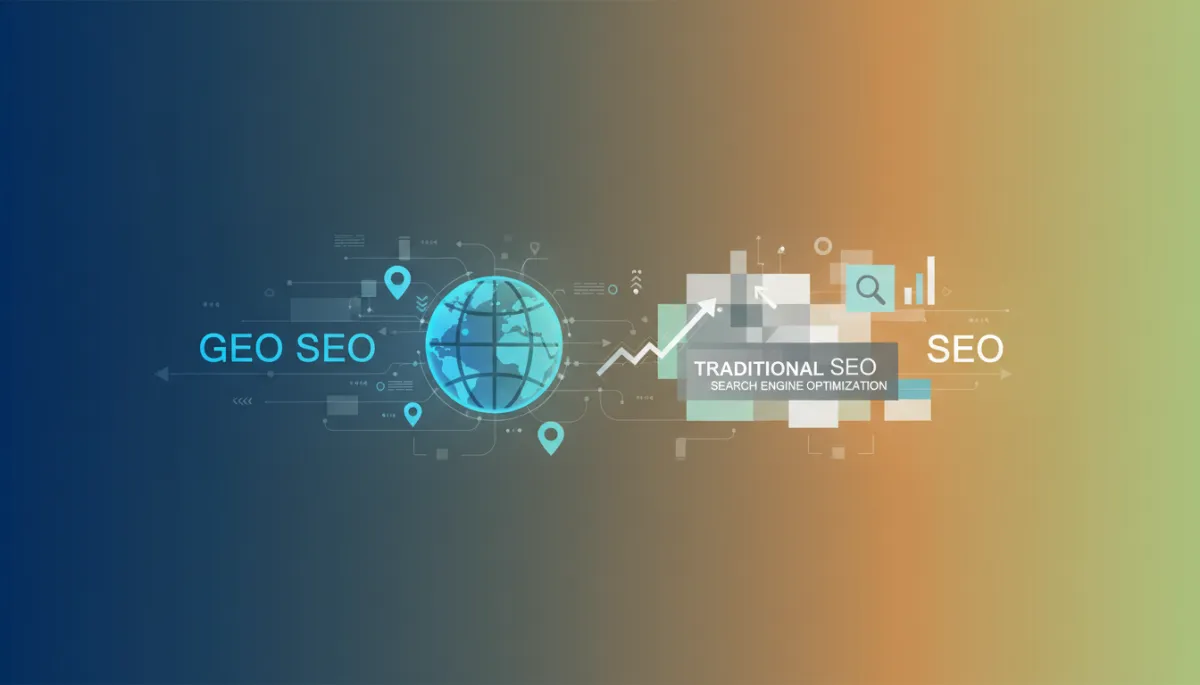
GEO vs Traditional SEO: Insights for Canada 2026
Digital Marketing, GEO SEO, Local Search
Is GEO Replacing Traditional SEO? What Canadian Businesses Need to Know in 2026
GEO SEO and AI-driven discovery are reshaping how customers find local businesses—but that doesn’t mean traditional Search Engine Optimization is dead. For Canadian businesses and agencies, the real opportunity lies in understanding how GEO and traditional SEO work together to drive more leads, calls, and walk-ins.
Is GEO Replacing Traditional SEO—or Expanding It?
GEO (Generative Engine Optimization) focuses on how your brand appears inside AI-driven experiences—Google’s AI Overviews, Gemini, ChatGPT, and other assistants. Research shows AI summaries now appear in up to 80% of local search queries, often answering questions before a user ever clicks a website. At the same time, around 99% of AI Overviews still draw from pages already ranking in the top 10 of Google’s traditional results. In other words, GEO SEO does not replace traditional SEO—it builds on it (seo-manager.info, wordstream.com).
For small and medium-sized businesses in Canada, the practical takeaway is clear: if your website and local profiles aren’t already strong from a traditional SEO perspective, your chances of being recommended by AI engines drop dramatically. GEO is the new layer on top—not a shortcut around fundamentals.
What Exactly Is GEO SEO?
GEO SEO is the practice of optimizing your brand so AI systems can confidently reference, summarize, and recommend you. Instead of focusing only on blue links, GEO asks: How often does an AI assistant choose us when a user asks a question? That includes:
Being cited in AI Overviews and conversational answers for your services and city
Appearing in “best of” lists, comparison articles, and trusted directories AI pulls from
Structuring content so AI can easily extract facts—hours, pricing ranges, locations, specialties
With GEO SEO, new metrics are emerging: AI Share of Voice, Recommendation Rate, Citation Authority—all measuring how often AI engines surface your brand (presenc.ai). For agencies, these become powerful KPIs to report alongside traditional rankings and traffic.
Traditional SEO Still Powers Discovery
Traditional SEO remains the backbone of Search Engine Optimization. It covers on-page content, technical health, backlinks, and user experience—everything needed to rank in classic SERPs. In 2026, it still matters because:
AI engines lean heavily on high-ranking, trustworthy pages when generating answers
Many buyers still scroll beyond AI Overviews to compare options on websites
Organic traffic remains a key driver of leads and long-term ROI in Digital Marketing
For Canadian businesses, strong traditional SEO means fast, mobile-friendly pages, clear service descriptions, localized keywords, and well-structured content that answers real customer questions. Without this, both classic rankings and GEO visibility suffer.
Local Search: Where GEO SEO Hits the Street
Local Search is where these SEO trends become tangible revenue. Around 46% of all Google searches now carry local intent, and local queries convert at roughly 80%, with 76% of “near me” searchers visiting a business within 24 hours (seoscaleup.com, searchlab.nl). For a dentist in Toronto or a contractor in Calgary, this is where GEO SEO and traditional SEO intersect most directly with sales.
In 2026, Google Business Profile (GBP) is still central, but AI Overviews increasingly summarize information right on the results page. That means:
Accurate NAP (Name, Address, Phone) and categories are non‑negotiable
Frequent GBP posts, Q&A management, and updated hours improve both Local Pack and AI visibility
Reviews and local citations act as trust signals AI engines rely on heavily
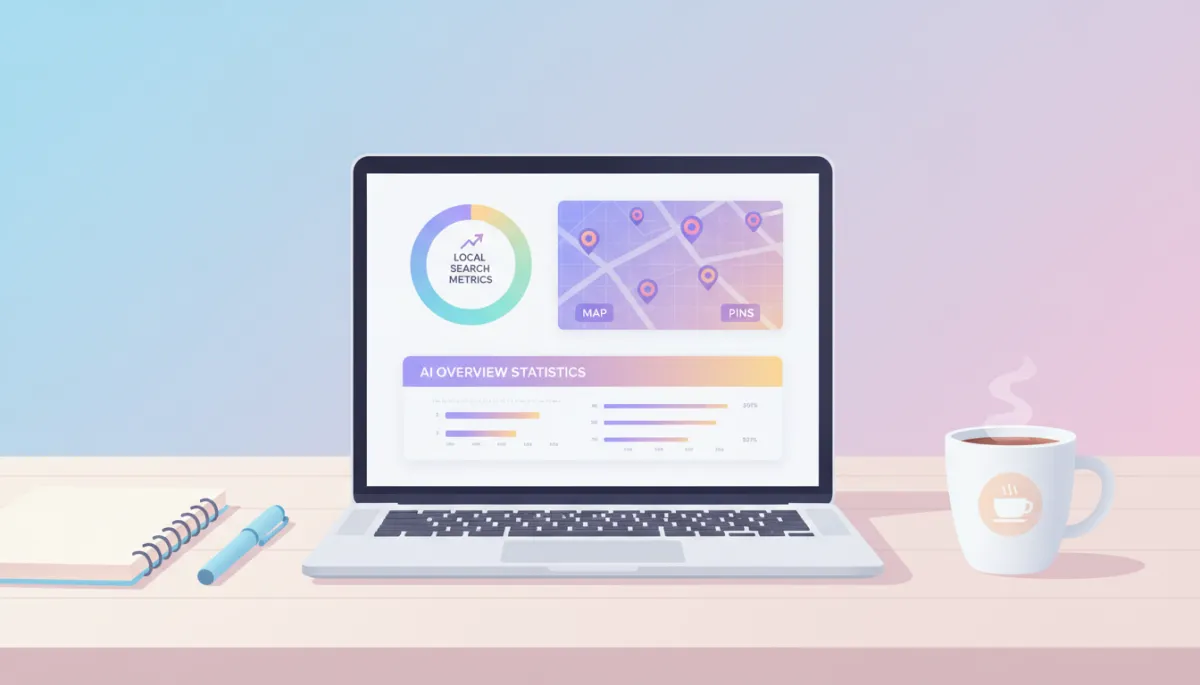
Tracking both traditional and GEO SEO metrics reveals where local leads really come from.
How GEO and SEO Fit Into a Modern Digital Marketing Strategy
For agencies and in‑house teams, the smartest move is a hybrid approach: treat GEO SEO as an evolution of Search Engine Optimization, not a competing discipline. A practical framework looks like this:
Strengthen traditional SEO: fix technical issues, improve content depth, earn quality backlinks, and ensure on‑page optimization for your core services and locations.
Double down on Local Search: optimize GBP, build hyper‑local pages (e.g., “plumber in Kitsilano” rather than just “Vancouver plumber”), and encourage ongoing reviews.
Layer on GEO SEO: structure FAQs, service descriptions, and location content so AI engines can quote you; pursue mentions in authoritative local and industry sites that AI trusts.
💡 Pro Tip for Agencies: Report on both classic SEO metrics (rankings, organic sessions) and GEO metrics (AI citations, visibility in AI Overviews) to show clients the full picture of their Digital Marketing performance.
Where LeadMagno Fits: Turning Visibility into Revenue
Visibility is only half the battle. As GEO SEO and traditional SEO send more calls, messages, and form fills your way, the real question becomes: How many of those leads do you actually convert? This is where LeadMagno helps Canadian businesses close the loop between Search Engine Optimization and sales outcomes.
LeadMagno’s all‑in‑one marketing CRM captures leads from your website, Local Search listings, landing pages, and campaigns, then automates follow‑ups via email and SMS. Instead of losing opportunities to missed calls or forgotten inquiries, you nurture every prospect—whether they discovered you through traditional SEO, GEO SEO, or an AI assistant’s recommendation.
Final Verdict: GEO Isn’t Replacing SEO—It’s Raising the Bar
GEO SEO is not the end of traditional SEO—it’s the next chapter. Businesses and agencies that win in 2026 will:
Maintain strong fundamentals in Search Engine Optimization
Treat Local Search as a core revenue channel, not an afterthought
Optimize for how AI engines read, trust, and recommend their brand
If you’re ready to turn that visibility into predictable growth—and stop losing leads to slow follow‑ups and scattered tools—book a free demo with LeadMagno today and see how an all‑in‑one marketing CRM can support your GEO SEO, traditional SEO, and broader Digital Marketing strategy in one streamlined platform.


