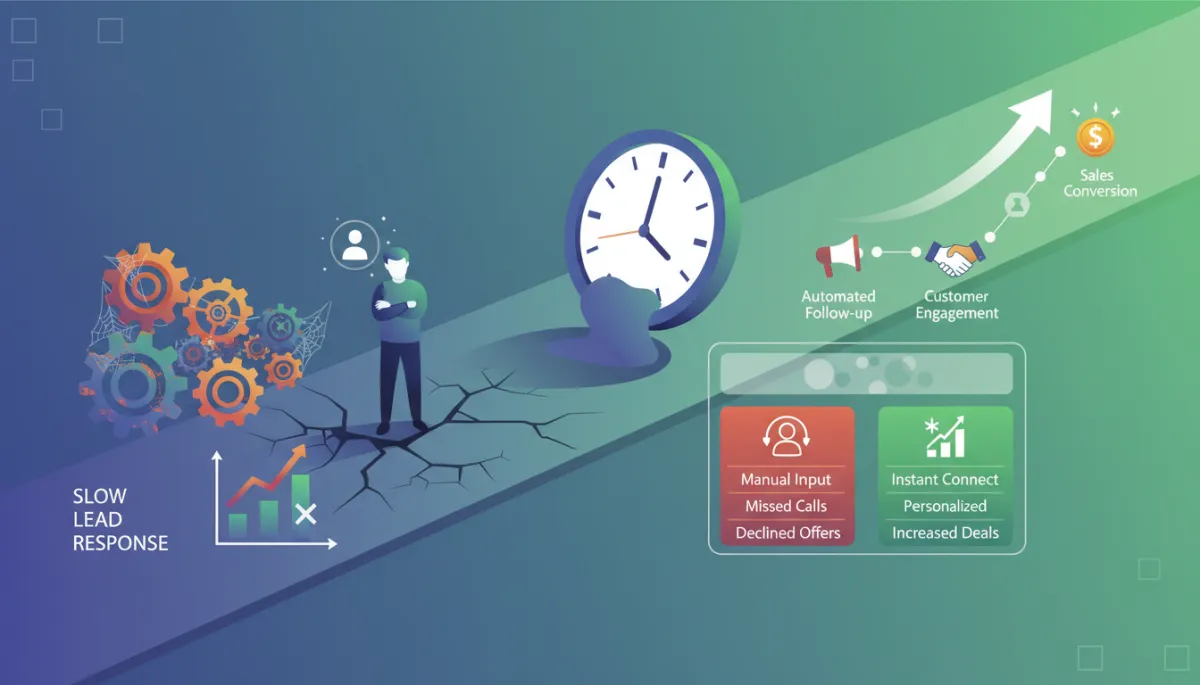
Boost Sales by Reducing Lead Response Time
Lead Response Time, Customer Engagement, Sales Conversion, Lead Management, Automated Follow-up
The Hidden Cost of Slow Lead Response: How Delays Drain Your Revenue
Imagine paying $80 for a Google Ads lead—only to lose it because nobody replied until the next morning. That happens every day. Most businesses don’t lose customers because of bad marketing. They lose them because they respond too slowly.
When a new lead reaches out, the clock starts ticking. Every minute you wait to respond quietly erodes trust, interest, and your chances of making a sale. For Canadian small and medium-sized businesses, slow lead response isn’t just a minor operational issue—it’s a major, often invisible cost that eats into your marketing budget and future growth. This is exactly the problem LeadMagno was built to solve. If you’re unsure where to start, a tailored digital consultancy strategy can help you align your systems, messaging, and tools to handle leads faster and more effectively.
📌 Quick Summary: If you're short on time, here’s what matters most:
Responding quickly dramatically increases engagement and connection rates.
Slow responses quietly reduce trust and make you look disorganized.
Every delay lowers conversion rates and wastes your marketing budget.
Automation prevents missed opportunities by responding instantly and consistently.
Faster follow-up improves ROI from Google Ads, social campaigns, and referrals.
LeadMagno helps automate responses and follow-ups from a single, unified dashboard.
Why Lead Response Time Matters More Than You Think
Lead response time is the amount of time it takes your business to respond after a prospect fills out a form, clicks an ad, calls, or sends a message. It sounds simple, yet it is one of the most powerful predictors of whether that lead will engage with you—or disappear to a competitor down the street or online.
Studies consistently show that contacting a lead within the first hour dramatically increases the chance of a meaningful conversation. Respond within a few minutes, and your odds of connection and conversion soar. Wait a few hours—or days—and that same lead becomes cold, distracted, and far less likely to buy from you, no matter how good your product or service is.
Why Speed Matters: The Numbers Behind Faster Responses
Research from multiple sales studies shows that businesses that respond within 5 minutes are up to 8–10 times more likely to connect with a lead than those that wait 1 hour. After 24 hours, the likelihood of a meaningful conversation can drop by more than 80% because prospects have usually continued researching, contacted competitors, or simply moved on with their day.
For Canadian small and medium-sized businesses investing heavily in paid traffic, social media, or content marketing, this difference in speed can mean the gap between a profitable campaign and one that appears to “not work”—even when the marketing itself is generating quality leads.
📌 Key Takeaway: Lead response time isn’t just a metric; it’s a competitive advantage. Fast responses signal professionalism, reliability, and respect for your prospect’s time.
From Click to Conversation: How Response Speed Shapes Customer Engagement
Every new lead represents a moment of peak curiosity. They just saw your ad, visited your website, or read your reviews. Their interest is fresh—and fragile. Customer engagement begins the moment they reach out, and your first response sets the tone for the entire relationship.
Fast response: Feels personal, attentive, and trustworthy. The lead thinks, “If they respond this quickly now, they’ll likely take good care of me later.”
Slow response: Feels dismissive or disorganized. The lead wonders, “If it takes this long just to reply, what will service be like after I buy?”
In a Canadian market where customers can compare options in seconds, engagement is fragile. A delayed reply gives them time to research alternatives, ask friends for referrals, or respond to another company that simply got back to them first. By the time you reply, you’re no longer the only or the obvious choice—you’re an afterthought.
💡 Pro Tip: Treat every new inquiry like a live conversation. If you wouldn’t wait hours to answer someone standing at your front counter, don’t do it online either.
The Direct Link Between Response Time and Sales Conversion
Sales conversion doesn’t start when you send a quote or pitch your offer—it starts with your first reply. The faster you respond, the more likely you are to:
Reach the lead while they’re still actively thinking about their problem.
Answer questions before doubt and hesitation creep in.
Position your business as the most responsive and reliable option.
For many small and medium-sized businesses, marketing spend is already a significant investment. You pay for ads, content, events, or referrals to generate leads. But if those leads sit unanswered in your inbox or spreadsheet, your conversion rate drops and your cost per acquisition quietly rises. The result: you’re paying more for fewer customers—simply because of response delay, not because your offer is weak.
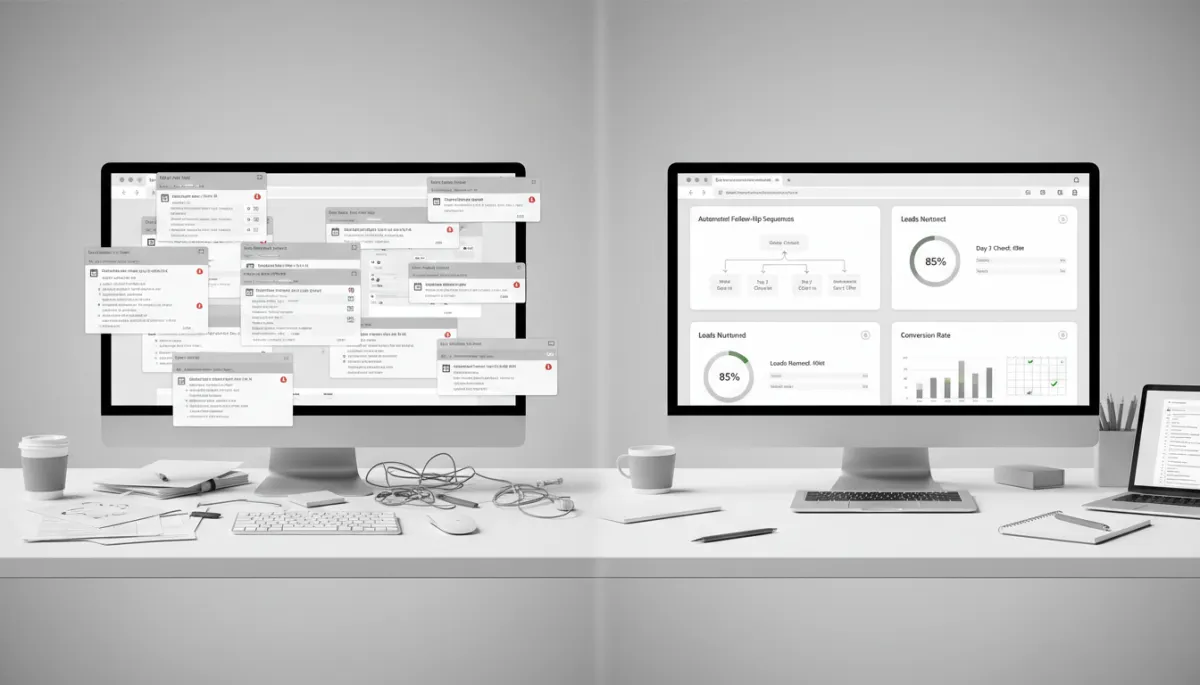
Organized, automated lead management turns more first contacts into real sales conversations.
The Hidden Cost of Response Delay: What You’re Really Losing
Response delay is more than an inconvenience—it’s a silent profit killer. The losses show up in several ways that are easy to overlook day to day but painful over a full year.
1. Wasted Marketing Budget
Every unreturned call, unread form submission, or forgotten DM represents real dollars spent on marketing that never had a chance to pay off. You might be tracking impressions and clicks, but if your response times are slow, a chunk of that budget is simply evaporating. LeadMagno’s customers are often shocked when they first see how many leads were slipping through the cracks before automation.
2. Lost Lifetime Value
A single missed lead isn’t just one lost sale. It could be years of repeat purchases, referrals, and reviews that never happen. Slow lead response doesn’t just hurt this month’s revenue; it reduces your long-term customer base and the stability of your business.
3. Damaged Brand Perception
In a service-driven economy, responsiveness is part of your brand. When leads experience delays, they don’t separate “marketing” from “operations”—they simply conclude that your company is slow or disorganized. That perception spreads through online reviews, word of mouth, and social media, affecting future leads you never even see.
4. Overwhelmed Teams and Burnout
When your team is juggling spreadsheets, inboxes, and sticky notes, it becomes almost impossible to keep up with every inquiry. Important leads get buried, follow-ups are forgotten, and staff feel constantly behind. This reactive mode leads to stress, mistakes, and inconsistent customer experiences—exactly what growing businesses in Canada want to avoid.
⚠️ Warning: If you don’t measure lead response time, you’re almost certainly underestimating how many opportunities you’re losing each month.
Hidden Costs Businesses Never Measure
Most businesses carefully track the front end of their marketing—clicks, impressions, and cost per lead—but rarely measure what happens after a prospect reaches out. That’s where the most expensive leaks occur.
They usually measure: leads generated, cost per lead, website traffic, and ad performance.
They almost never measure: first-response time, unanswered inquiries, missed calls, abandoned forms, or leads forgotten after quoting.
LeadMagno helps make these hidden costs visible by tracking every inquiry, response time, and follow-up step in one place—so you can finally see where revenue is slipping away and fix it.
Slow Lead Response vs Fast Lead Response: A Side‑by‑Side Comparison
To make the impact of lead response time crystal clear, here’s a comparison between slow and fast responses. This mirrors the shift many LeadMagno clients experience when they move from manual processes to automated lead management and follow-up.
Slow Lead Response Fast Lead Response Leads wait hours or days for a reply, often hearing back only during office hours. Leads receive an instant confirmation and timely follow-up, even after hours. Prospects lose interest, compare competitors, or forget why they reached out. Prospects stay engaged while their interest and intent are at their peak. The team scrambles through emails, spreadsheets, and messages to track inquiries. All leads are captured in one place with clear tasks and next steps. Missed follow-ups lead to lost deals and unpredictable revenue. Automated reminders and sequences keep every lead moving forward. Marketing spend is wasted on leads that never receive timely attention. Marketing ROI improves as more leads convert into booked calls and sales.
Business Responds Quickly vs Business Responds Slowly
Business Responds Quickly Business Responds Slowly Lead feels valued and taken seriously from the first touch. Lead feels ignored, uncertain, or like “just another inquiry.” Higher trust and confidence in your ability to deliver. Lower trust and doubts about service quality and reliability. More booked appointments, demos, and consultations. More abandoned inquiries and “ghosted” quotes. Better marketing ROI and lower cost per acquisition. Higher acquisition cost and less predictable revenue. More referrals, reviews, and repeat business over time. Lost opportunities that never show up in your reports.
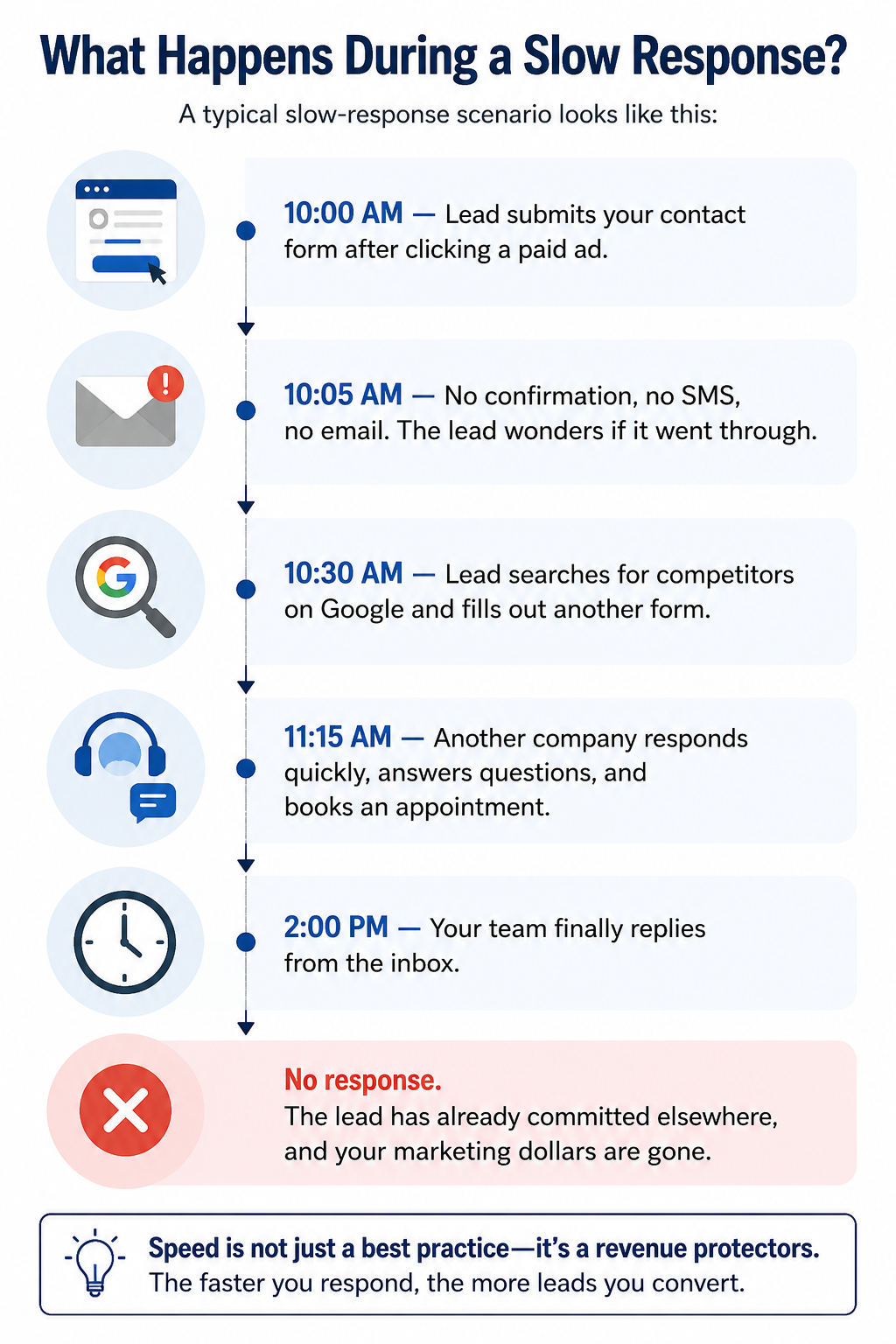
What Happens During a Slow Response?
A typical slow-response scenario looks like this:
Strong Lead Management: The Foundation of Faster Responses
You can’t fix what you can’t see. Effective lead management is what turns scattered inquiries into a clear, trackable pipeline. Instead of relying on memory, inbox searches, or manual notes, your team needs a system that:
Captures every lead automatically from web forms, ads, social media, calls, and SMS.
Centralizes all contact details, conversations, and activities in one place.
Assigns leads to the right team member with clear priorities and due dates.
Track response time to monitor and improve performance over time.
LeadMagno was designed specifically for Canadian businesses that are tired of juggling multiple tools. By unifying CRM, email, SMS, and automation in a single dashboard, you make it far easier to respond quickly, follow up consistently, and see exactly where each lead stands in your pipeline.
Automated Follow‑up: Your Always‑On Response Team
Even the best teams can’t respond instantly to every inquiry, 24/7. That’s where automated follow-up becomes essential. Automation doesn’t replace the human touch—it protects it by ensuring no lead is left waiting in silence.
How Automated Follow‑up Prevents Response Delays
Instant confirmation: As soon as a lead submits a form or calls, they receive an automated email or SMS confirming you’ve received their request and outlining next steps.
Smart routing: Leads are automatically assigned to the right person based on service type, location, or campaign, reducing internal delays and confusion.
Timed reminders: If no one responds within a set timeframe, the system sends reminders or escalates the lead so it doesn’t fall through the cracks.
Nurture sequences: For leads not ready to buy immediately, automated email and SMS sequences provide helpful content, answers, and offers over time—keeping your brand top of mind.
The result is a lead experience that feels responsive and professional, even when your team is in meetings, serving clients, or outside business hours. Automation does the heavy lifting in the background so your staff can focus on meaningful conversations and closing deals.
Real‑World Example: From Missed Calls to Consistent Conversions
ABC Plumbing, a local home services company in Toronto, receives around 200 Google Ads leads every month. Many inquiries arrive after 6 PM, when homeowners are finally off work and thinking about repairs. Before automation, those messages sat in an inbox until the next morning. By Monday, the team was buried, and some leads waited days for a response. Conversion rates hovered around 8–10%, and the owner assumed the problem was with the ads or pricing.
After implementing LeadMagno’s automated follow-up and social media marketing support:
Every new lead instantly received a personalized SMS and email confirming their request and inviting them to book a time.
LeadMagno automatically offered available appointment slots, reducing back-and-forth and missed calls.
Leads who didn’t book right away entered a 7‑day nurture sequence with FAQs, testimonials, and gentle reminders.
The team dashboard highlighted overdue responses and upcoming follow-ups to ensure nothing was missed, and ownership of each lead was clearly assigned.
Within 60 days, average lead response time dropped from “whenever we can get to it” to under 15 minutes during business hours, with instant automated messages after hours. The same ad budget now produced more booked appointments, higher close rates, and a noticeable increase in monthly revenue. The difference came from speed, consistency, and smarter lead management—not more marketing dollars.
The Lead Journey: A Simple Framework
Think of your lead process as a chain of connected stages:
Every delay at the top of this chain—especially between “Lead Generated” and “Immediate Response”—weakens every stage that follows. LeadMagno helps you protect those early moments so more leads naturally move through to appointments, sales, and referrals.
Bringing It All Together with LeadMagno
The hidden cost of slow lead response is real—but it’s also fixable. By focusing on the six core areas we’ve explored—lead response time, customer engagement, sales conversion, response delay, lead management, and automated follow-up—you can transform the way your business captures and converts opportunities.
Shorten your response time so more leads hear from you first.
Engage prospects when their interest is highest, and questions are most urgent.
Convert more inquiries into appointments, consultations, and sales—without hiring a larger team.
Eliminate response delays caused by manual tracking, busy schedules, or scattered tools.
Build a predictable, measurable lead pipeline that supports long‑term growth.
LeadMagno exists to make this transformation simple for Canadian small and medium-sized businesses. As an all‑in‑one marketing CRM, it helps you capture leads from every source, automate email and SMS follow-ups, centralize communication, and track the metrics that matter—so you can stop losing leads to slow responses and start turning more of them into loyal clients.
📌 Key Takeaway: You don’t need more leads—you need to respond faster and follow up smarter with the leads you already have.
Take the Next Step: Turn Response Speed into a Growth Engine
If you’re investing in marketing but still wondering where the results are, your lead response process is the first place to look. Slow responses are costing you more than you can see on the surface—lost conversations, lost trust, and lost revenue. The good news is that with the right system, you can fix it quickly and sustainably.
LeadMagno gives you the tools to respond faster, engage better, and convert more leads—without adding complexity or extra software. From the first click to long-term customer loyalty, you’ll have a streamlined, automated process that works as hard as you do.
Every minute you delay responding increases the chance that another business earns the customer you already paid to attract. LeadMagno helps you respond instantly, automate follow-up, and convert more inquiries into customers—without adding more staff or more software. Book your free demo today and see exactly where your leads are leaking.


