
Understanding Local SEO Pricing Variations
Local SEO, Pricing Strategy, Digital Growth
Why Local SEO Prices Vary So Much — And What Smart Local Leaders Should Pay For
Local SEO is no longer a side project — it is the operating layer between your physical locations and how customers actually search, decide, and buy. Yet in the same city, one agency quotes $600 per month, another $6,000. The spread looks irrational until you view local SEO as a growth system, not a set of tasks. This article explains that system, why pricing diverges, and how to invest with board-level discipline rather than hope marketing.
What Is Local SEO Pricing?
Local SEO pricing is the structured cost a business pays for ongoing or project-based work to improve visibility, relevance, and conversion in location-based search results — from Google Business Profiles to “near me” queries and local content experiences.
One-line summary: Local SEO pricing is the investment level required to win profitable local search demand in your specific market conditions.
1. The Reality Check — What Businesses Actually Pay in 2026
Across recent industry benchmarks, most single-location businesses invest $500–$3,000 per month in local SEO, while multi-location and franchise brands often spend $2,000–$10,000+ per month in total [1][2]. One-time projects, such as audits or Google Business Profile (GBP) setups, range from $300–$5,000, and hourly consulting typically sits between $75–$250+ [1][3]. Prices have increased by roughly 18% since 2023, even as AI has reduced routine labor time by 20–30% [1][3].
Engagement Type Typical 2026 Range When It Fits Monthly retainer — single location $500–$3,000/month [1][2] Ongoing growth in one city or region Multi-location / franchise $2,000–$10,000+/month [1][2] Chains, clinics, multi-office professional services One-time audits / setup $300–$5,000 [1] Diagnostics, turnarounds, or pre-rebrand work
2. The Revenue Operating System — A Better Lens for Local SEO Spend
Most local businesses still buy SEO as a service menu — citations, on-page, “10 keywords” — instead of as a Revenue Operating System (RevOS). RevOS treats local SEO as a connected stack of capabilities that moves a searcher from intent to booked revenue:
Demand capture — rankings in maps, organic, and “near me” queries (AEO + GEO coverage).
Answer-Economy Positioning — your content and profiles become the best short answer to micro-questions customers ask.
Conversion infrastructure — reviews, calls-to-action, booking flows, and CRM integration.
Agencies pricing at the low end often sell only the first layer. Firms operating a true RevOS — like a strategic digital consultancy that aligns channels, content, and sales — will price higher because they are building a system, not ticking boxes.
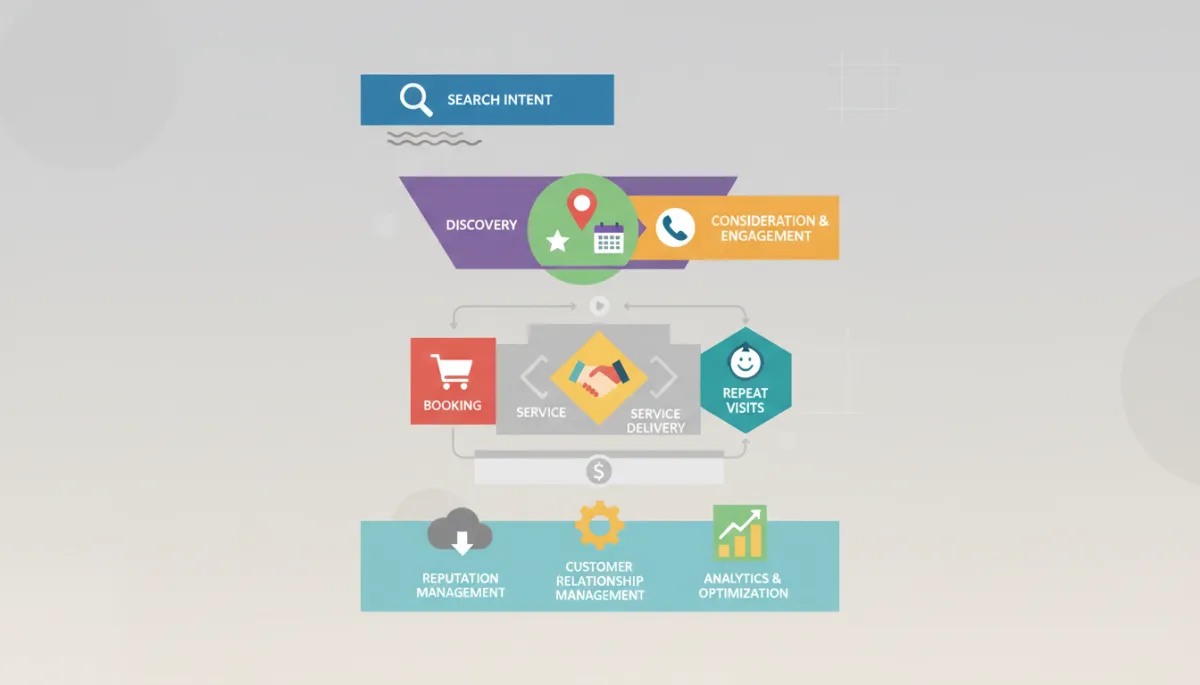
Treat local SEO as a connected revenue system, not a list of tasks.
3. Five Strategic Drivers Behind Local SEO Price Gaps
Market geometry — how many battles are you fighting? A single-location clinic in a mid-sized town pays less than a multi-location legal practice competing in several dense metros. More locations and more “micro-markets” mean more GBPs, more local pages, more review strategies — and higher cost [1][2].
Scope depth — visibility vs. revenue accountability. Low-fee vendors often stop at rankings. Higher-fee partners commit to leads and revenue, integrating analytics, call tracking, and tools like MagnoPro for pipeline visibility. You are paying for business outcomes, not only impressions.
Content sophistication — AEO-ready, not keyword-stuffed. In the answer economy, Google and AI assistants reward businesses that structure content around real questions, entities, and local context. That requires a content marketing strategy, not generic blog posts — and it is priced accordingly [2].
Channel integration — SEO in isolation is a tax. When local SEO is integrated with paid, CRM, and social media marketing, the cost per channel can rise, but blended CAC falls. Disconnected cheap SEO often looks inexpensive but underperforms at the portfolio level.
Provider maturity — freelancer, execution agency, or growth advisory. Freelancers may charge $25–$80/hour, while senior strategists and agencies command $150–$250+/hour [1][3]. The delta reflects not just experience, but the ability to architect systems, not just implement tasks.
4. Answer-Economy Positioning — AEO + GEO as Your Pricing Compass
Local search is shifting from “ten blue links” to answers — in map packs, AI overviews, and voice responses. We call this Answer-Economy Positioning (AEP): your brand’s ability to be the most trusted, concise answer for high-intent local questions, across locations and devices. AEP blends:
AEO (Answer Engine Optimization) — structuring content and FAQs around micro-questions, entities, and schema so AI and search engines can surface you confidently.
GEO (Geographic Experience Optimization) — tailoring that content to neighborhoods, service areas, and local proof (reviews, photos, case stories).
Providers pricing at the premium end usually invest heavily in AEP — structured data, location-specific content, and conversion flows for each market. If an offer is low but ignores AEO and GEO, you are buying yesterday’s SEO at tomorrow’s risk level.
5. A Practical Decision Framework for Local Leaders
Step 1 — Quantify search-driven revenue. Estimate how many monthly leads and closed deals originate from local search today versus your potential. This is your RevOS upside.
Step 2 — Map your system gaps. Audit GBPs, local landing pages, reviews, tracking, and content. A structured audit in the $750–$3,000 range [1] is often a high-ROI starting point with a strategic partner such as a digital consultancy.
Step 3 — Choose the right operating model. If you need a repeatable system, a retainer in the $800–$3,000/month range for single locations or $2,500–$10,000+ for multi-location is realistic [1][2]. For in-house teams, consider augmenting with tools like MagnoPro and expert strategy sessions via a demo consultation.
Step 4 — Demand system-level KPIs. Tie investment to metrics across the funnel: local impressions, map pack share, calls, bookings, and closed revenue per location. “Rankings for 10 keywords” is not a board-ready KPI.
Putting It All Together — The Local SEO Pricing System for Leaders
Local SEO prices vary because providers are selling fundamentally different things: hours vs. outcomes, tasks vs. systems, rankings vs. revenue. As a leader, your job is to design a Revenue Operating System where local search is a core engine — fueled by Answer-Economy Positioning, integrated data, and channel orchestration — rather than a siloed tactic.
In practice, that means three focus areas:
System connections — connect local SEO with CRM, paid media, and social so every location-level interaction is tracked and learnings compound.
Execution focus — prioritize AEO + GEO content, GBP excellence, and review velocity before chasing vanity keywords.
Partner differentiation — select partners that think in systems, bring integrated digital consultancy capabilities, and are prepared to be measured on revenue, not just rankings.
When you evaluate local SEO pricing through this lens, the question shifts from “Why is this quote higher?” to “Which investment turns local search into a durable revenue asset for our locations over the next three years?” That is the level of decision-making your competitors are already moving toward.


