
Optimize for AI Search: Strategies for Small Businesses
AI Search Optimization, Digital Marketing Strategies, Lead Generation
How Small Businesses Can Really Optimize for AI‑Powered Search
AI‑powered search is quietly rewriting the rules of visibility. It’s no longer about who ranks #1 for a keyword, but whose brand an AI system trusts enough to reference, recommend, and route leads to. For Canadian small and medium‑sized businesses, that shift is both a risk and a major opportunity.

Direct Answer: How Do Businesses Optimize for AI‑Powered Search?
To optimize for AI‑powered search, businesses must move beyond classic SEO and focus on three pillars: semantic clarity (content that clearly answers real questions), credibility (evidence, expertise, and consistency), and machine readability (structured data, entities, and clean technical foundations). In practice, that means designing your entire digital presence so that Google, Bing, and AI assistants can confidently summarize your expertise, recommend your services, and send high‑intent leads your way.
📌 Key Takeaway: AI doesn’t “rank” pages the way search engines used to. It assembles answers from brands it understands, trusts, and can clearly map to a user’s question and location.
From SEO to AI Search Optimization: What’s Actually Different?
Traditional Small Business SEO focused on ranking pages for exact keywords. AI Search Optimization focuses on being the most reliable, context‑rich source on a topic so AI systems cite you in summaries, overviews, and chat‑style answers.
Instead of chasing “dentist Toronto,” you build deep topical authority on “family dental care in Toronto,” answering dozens of related questions that AI engines can pull from.
Instead of thin landing pages, you create content marketing assets that combine how‑to depth, pricing clarity, and local proof—ideal for AI to quote and summarize.
If you need help translating this into a roadmap, a digital consultancy engagement can align AI search priorities with your revenue goals instead of chasing vanity metrics.
Executive Diagnostic: Is Your Business Ready for AI Search?
Before you overhaul your strategy, pressure‑test your current digital presence against how AI systems actually evaluate businesses. Use this quick diagnostic as an executive‑level checklist:
Does your website answer real customer questions in clear, direct language?
Do you publish original expertise (not just AI‑generated summaries of what others have said)?
Is your Google Business Profile fully optimized with accurate categories, services, photos, and posts?
Are your service pages structured with FAQs that mirror how customers actually ask questions?
Can AI clearly identify your business location and specialties from your website and profiles?
Do you consistently generate reviews that mention your services, cities, and outcomes in natural language?
💡 Pro Tip: If you answered “no” to two or more of these questions, you don’t need more traffic yet—you need clearer signals that AI systems can understand and trust.

Content Architecture for AI: How to Make Your Expertise “Extractable”
AI systems excel at pulling structured, well‑organized answers. That’s where strategic content marketing and information architecture matter more than ever:
Use clear question‑based headings (“How much does X cost in Calgary?”, “Is Y right for small law firms?”) so AI can map your content to real queries.
Provide concise, direct answers in the first 1–2 sentences, then expand with detail, examples, and data. This mirrors how AI models are trained to read and summarize.
Add local context—cities, provinces, regulations, and Canadian‑specific nuances—to strengthen your GEO optimization and eligibility for local AI recommendations.
A dedicated content marketing strategy built around topics, not just keywords, is now a core AI Search Optimization move—not a “nice‑to‑have blog plan.”
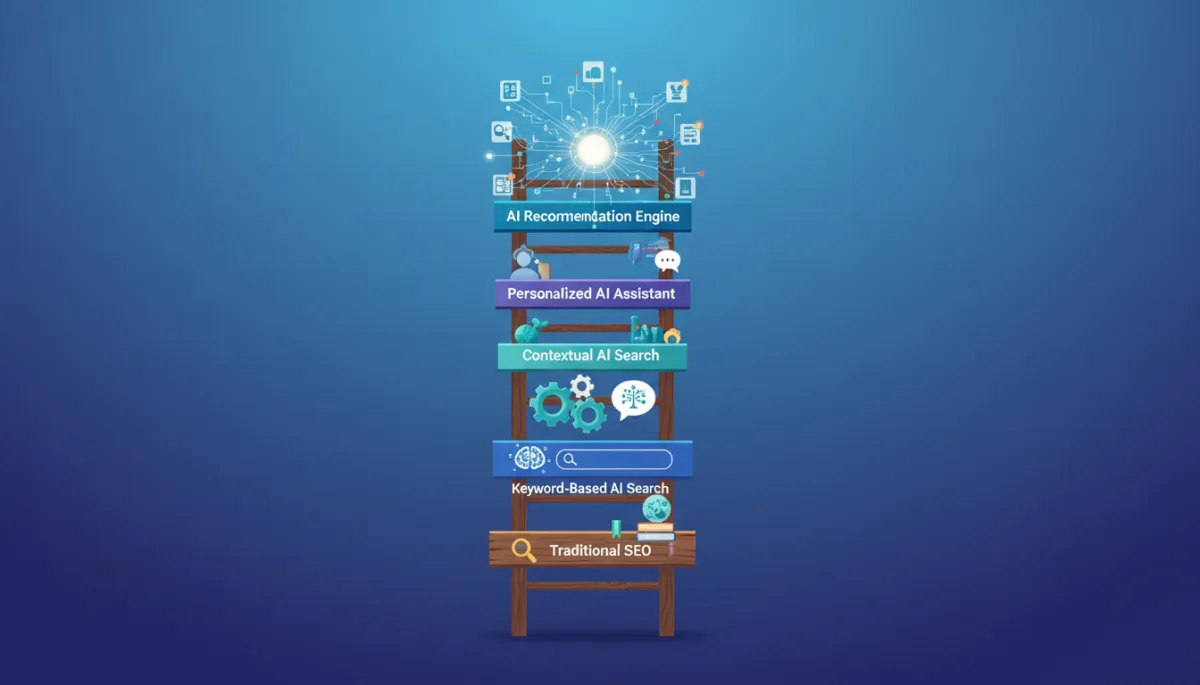
AI Search Readiness Framework: The AI Search Maturity Model
Readers—and executives—love simple maturity models because they make a complex shift feel concrete. Use this AI Search Maturity Model to see where your business sits today and what “better” actually looks like.
Stage 1 – Traditional SEO. Focus on keywords, meta tags, and basic on‑page optimization. You may rank for some terms, but AI systems have a shallow understanding of your expertise and location.
Stage 2 – Answer Engine Optimization. You structure content around questions and answers, build FAQ sections, and optimize for featured snippets and search overviews. AI can now extract usable responses from your site.
Stage 3 – Entity Optimization. You implement schema markup, clarify your business entities (brand, services, locations, people), and align NAP data across the web. AI can reliably identify who you are and what you do.
Stage 4 – AI Authority. You publish authoritative, experience‑backed content, generate consistent reviews, and earn mentions across platforms. AI begins to treat your brand as a trusted source within your niche and geography.
Stage 5 – AI Recommendation Engine. Your digital ecosystem is fully aligned—site, schema, reviews, CRM, and funnels. AI systems not only quote you; they recommend you as the next step for users ready to take action.
📌 Key Metrics to Track Across Stages: AI Citations, Branded Searches, AI Referral Traffic, Google Business Profile (GBP) calls, direction requests, demo requests, lead quality, and revenue per lead.
Digital Marketing Strategies That Feed AI and Generate Leads
The best digital marketing strategies for AI‑powered search are those that tie visibility directly to revenue. Three levers matter most for SMBs and agencies:
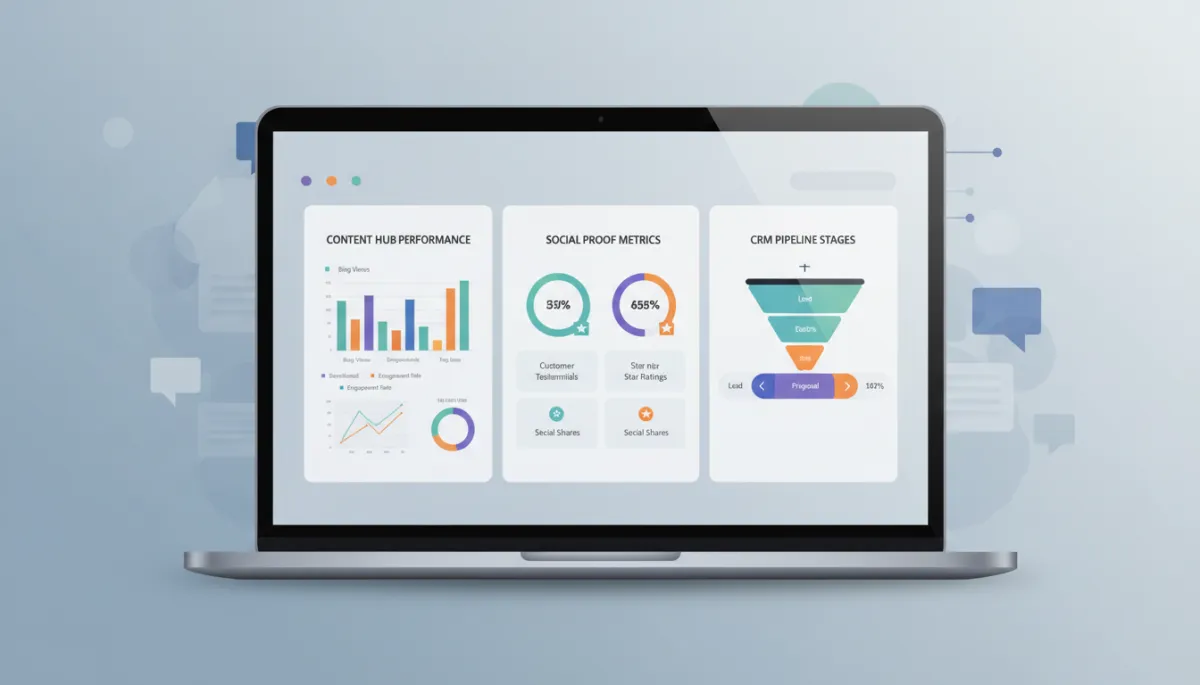
Authority‑building content hubs. Create deep resource centres around your core services—guides, checklists, calculators, and FAQs that AI can reference. LeadMagno’s own Local Visibility Operating System is built on this principle: own the topic, not just the term.
Social proof and social signals. AI systems scan reviews, mentions, and engagement to gauge trust. Consistent, value‑driven social media marketing reinforces that your brand is active, responsive, and relevant.
Conversion‑ready journeys. Getting cited by AI is only useful if visitors convert. This is where a marketing CRM like LeadMagno, powered by platforms such as GoHighLevel and its AI features , becomes critical—capturing, nurturing, and closing the leads AI sends your way.
Lead Generation Techniques for the AI Era
Modern lead generation techniques have to assume that discovery may start inside an AI assistant, a search overview, or even an autonomous “shopping agent.” Three practical plays:
Offer assets AI can recommend. Tools like LeadMagno’s MagnoPro give you conversion‑focused funnels and lead magnets that AI can surface when users ask “How do I automate my follow‑ups?” or “What’s the best CRM for Canadian service businesses?”
Automate follow‑up relentlessly. If AI‑driven visibility doubles your inquiries but your team still follows up manually, you’re leaking revenue. GoHighLevel’s automation and CRM stack —deployed through LeadMagno—lets you trigger email, SMS, and voicemail drops instantly when a lead opts in.
Make it easy to talk to a human. Prominent CTAs like “Book a strategy session” or “Schedule a demo” are exactly the phrases AI systems look for when recommending next steps. You can see this in action on our marketing strategy session funnel and demo booking flow .
💡 Pro Tip: AI can introduce you to more prospects—but only a disciplined follow‑up system, like the one inside LeadMagno, can turn those introductions into revenue.
Contrarian Insight: You Don’t Need More AI‑Generated Content
Most businesses think they need more AI‑generated content.
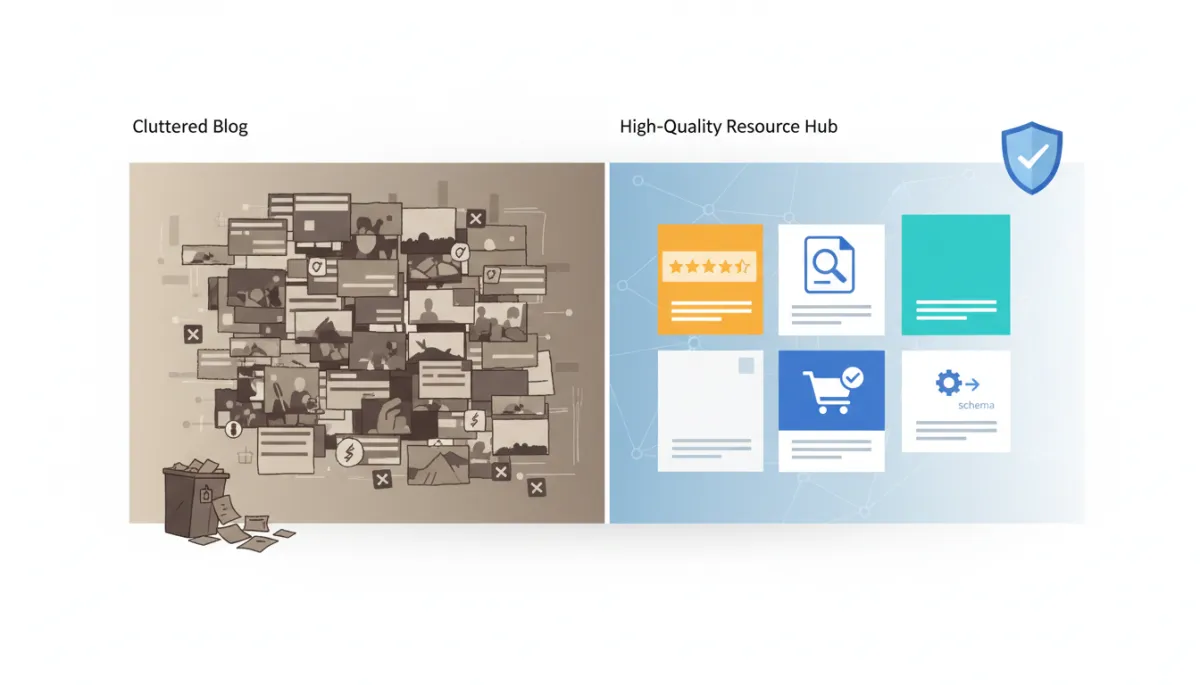
In reality, AI systems increasingly reward businesses that publish fewer, higher‑quality resources supported by real‑world expertise, customer reviews, and consistent entity signals.
That means your competitive edge isn’t “who can crank out the most blog posts with ChatGPT.” It’s who can:
Publish content that reflects lived experience with Canadian customers, regulations, and pricing realities.
Back that content up with review volume and quality that reinforces your claims.
Maintain clean entity signals across your website, Google Business Profile, directories, and social channels.
Real‑World Example: Calgary HVAC Company in the AI Era
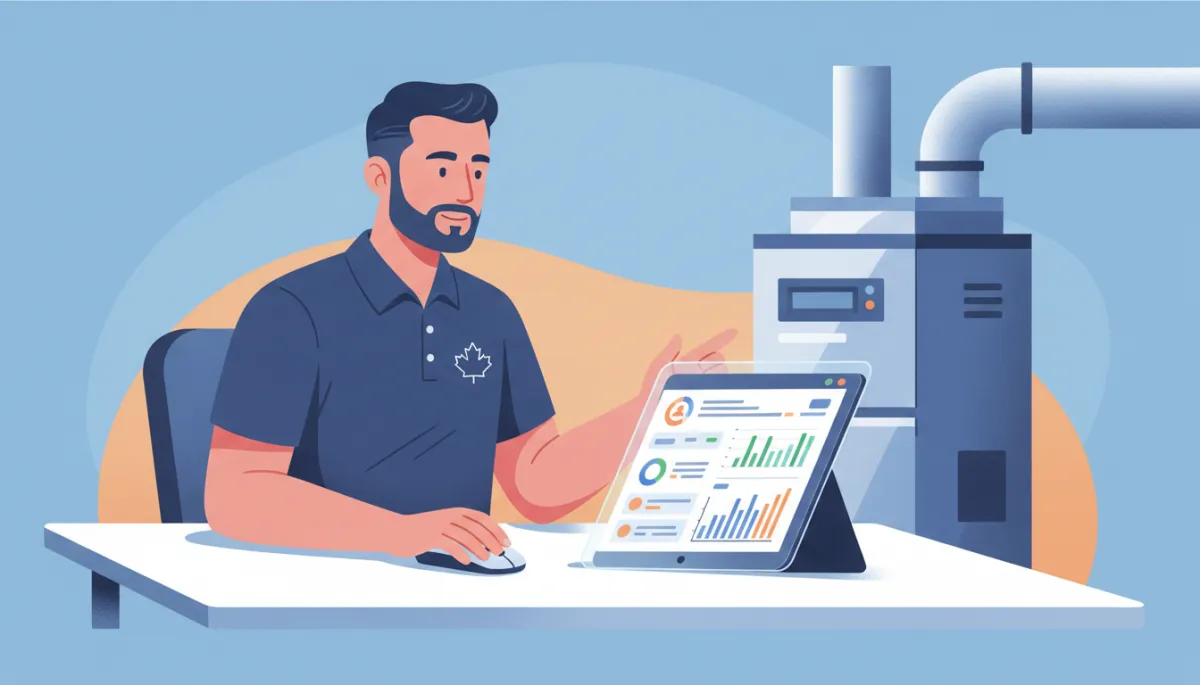
To see how this plays out in practice, consider a Calgary HVAC company that decided to modernize its digital presence for AI search. Instead of just adding more blog posts, the team focused on structure, clarity, and follow‑up.
They rebuilt their content into structured FAQ pages for heating, cooling, and maintenance, matching how homeowners actually ask questions.
They added LocalBusiness schema and service‑specific markup so AI systems could clearly understand their locations, services, and service areas around Calgary.
They fully optimized and regularly updated their Google Business Profile with photos, posts, and Q&A content.
They automated lead capture and follow‑up using LeadMagno, ensuring every inquiry triggered email, SMS, and task workflows.
Results after six months:
38% increase in organic impressions
27% more phone calls
41% increase in booked estimates
Higher branded search volume and more people searching for them by name
More frequent appearances in AI‑generated search summaries for Calgary HVAC queries
📌 Key Takeaway: The win wasn’t “more content.” It was better structure, clearer entities, and a CRM that ensured every AI‑driven inquiry was followed up.
AEO, GEO, and AI‑Powered Marketing: Making It Work in Canada
Answer Engine Optimization (AEO) and GEO optimization are simply about helping AI answer “who should I recommend here?” with confidence. For Canadian SMBs, that means:
Consistent NAP (name, address, phone) data, localized service pages, and reviews in the cities that matter to you.
Content that explicitly references Canadian regulations, pricing norms, and expectations—so AI knows you’re relevant to a user in Toronto, Calgary or Vancouver, not just “North America.”
This is where AI‑powered marketing platforms shine. HighLevel’s bootcamps and SaaS upgrade paths , combined with LeadMagno’s Canadian focus, let agencies and local businesses turn their AI visibility into recurring revenue models—not just one‑off campaigns.
Future Outlook: AI Search Becomes Recommendation Infrastructure
AI search is already shifting from “ten blue links” to rich overviews and conversational answers. Over the next few years, that evolution will accelerate and reshape how Canadian buyers discover and choose providers.
AI agents will complete searches on behalf of users. Instead of manually comparing options, people will increasingly ask agents to “find the best,” “book the appointment,” or “renew this service.”
Recommendation engines will replace traditional search results for many commercial queries, surfacing a small set of trusted providers instead of long results pages.
Brand authority will outweigh keyword targeting. Your reputation, reviews, and entity clarity will matter more than how many times you use a phrase on a page.
Structured content and entity optimization will become baseline requirements. Schema, FAQs, and clean site architecture will be table stakes—not advanced tactics.
Businesses with strong digital ecosystems—content, CRM, automation, and reviews all working together—will receive a disproportionate share of AI‑driven recommendations.
FAQ: Common Questions from SMB Owners and Agencies
Is classic SEO dead in an AI‑search world?
No—but it’s incomplete. Technical health, site speed, and on‑page SEO still matter. What’s changed is the ceiling: without semantic depth and authority, you won’t be the brand AI chooses to quote or recommend.
How long does AI Search Optimization take to pay off?
For most small businesses, you’ll see early signals—more branded searches, higher‑quality inquiries—within 90–120 days. Full flywheel impact typically appears around the 9–12 month mark, especially when paired with automation through tools like GoHighLevel’s annual plans and growth upgrades .
Where should we start if we’re overwhelmed?
Start with one topic, one funnel, and one follow‑up sequence. For example, build a focused content hub using the content strategy framework we use at LeadMagno, then plug that into an automated nurture path inside your CRM. Expansion becomes much easier once the first system is working.
Can ChatGPT send traffic to my website?
Yes—indirectly. When ChatGPT and similar tools surface your brand in answers, users often click through to learn more, book, or compare options. The key is having content and CTAs that make it easy to take the next step once they arrive.
Does schema markup help AI search?
Absolutely. Schema markup clarifies who you are, what you offer, where you operate, and how your content is structured. That extra clarity makes it easier for AI systems to extract accurate answers and associate your brand with specific services and locations.
Is AI search replacing Google?
Not overnight—but AI‑driven overviews and assistants are taking over more of the decision‑making process inside and outside Google. Treat AI search as an additional, rapidly growing layer on top of traditional search, not a complete replacement.
How long does AI optimization take?
Similar to SEO, AI optimization is a compounding effort. You can strengthen your signals in a few months, but the real payoff comes as your content, entities, and reviews mature over 6–12 months and beyond—especially when supported by automation and consistent marketing activity.
Do local businesses need AEO?
Yes. Local buyers are already seeing AI‑generated summaries and recommendations for “near me” searches. If you want to be the business those systems highlight in your city, AEO and GEO optimization are essential, not optional.
Can AI search improve lead quality?
Done right, yes. When you optimize for clear questions, structured answers, and strong entity signals, you attract prospects who already understand what you do and why you’re a fit—leading to higher intent, better close rates, and higher revenue per lead.
Final Strategic Takeaway
AI‑powered search is not a passing trend; it is becoming the default way buyers discover, compare, and choose providers. The businesses that win won’t be the ones producing the most content—they’ll be the ones whose expertise is easiest for AI to understand, trust, and act on.
At LeadMagno, we see this every day: when you align AI Search Optimization, digital marketing strategies, and automation, lead quality improves, follow‑ups stop slipping through the cracks, and marketing finally feels accountable to revenue. If you’re ready to build an AI‑ready growth engine for your Canadian business or agency, book a free demo today and see how our all‑in‑one platform can turn AI‑driven visibility into predictable, compounding growth.


