Optimize Sales Handoff: Avoid Campaign Failures
Lead Generation, Marketing Strategy, Lead Management, Sales Conversion
The Campaign Usually Breaks Before Sales Ever Gets a Real Chance
Many campaigns that generate interest still underperform because the gap between “I’m interested” and “Let’s talk” is fragile. In that gap, opportunities become harder to track and progress, context is lost, and momentum disappears. This is where a disciplined marketing-to-sales handoff becomes a competitive advantage.
Direct Answer: Marketing campaigns often fail before the first sales call because targeting, messaging, lead capture, routing, response, and follow-up are not connected. The campaign may generate an inquiry, but missing context, unclear ownership, delayed responses, and inconsistent follow-up prevent that inquiry from becoming a productive sales conversation.
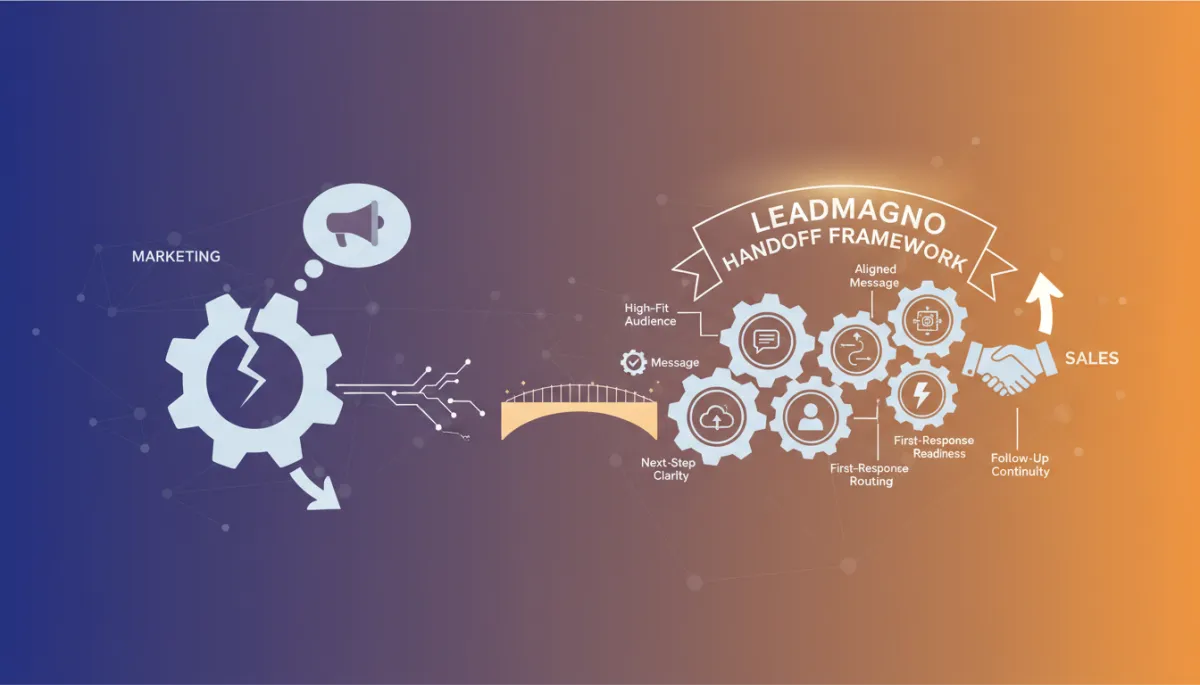
Quick Summary — The HANDOFF Framework
The HANDOFF Framework highlights seven points where campaigns commonly break before the first sales call:
• High-Fit Audience — define who you want and who you do not want.
• Aligned Message and Offer — match promise, problem, and commitment level.
• Next-Step Clarity — make the action and follow-up expectations explicit.
• Destination and Data Capture — use relevant, accessible landing pages and connected data.
• Ownership and Routing — assign each inquiry to a visible owner with clear next actions.
• First-Response Readiness — respond while attention and intent are still high.
• Follow-Up Continuity — nurture leads until timing, budget, or priorities align.
Disclosure: This article may contain affiliate links. We may receive a commission from qualifying purchases at no additional cost to you.
Why Campaigns Fail Before the First Sales Call
When inquiries do not turn into sales, the ad platform, the offer, or the sales team usually gets the blame. Yet a major cause of failure is the handoff itself — the way leads move from ad click, to form fill, to first conversation. Without a clear framework, even strong campaigns underperform, and marketing investment produces fewer meaningful sales opportunities.
The HANDOFF Framework helps businesses diagnose this hidden failure zone. It focuses on seven points where campaigns often break long before a rep ever speaks to a prospect. Marketing does not end when a form is submitted. That is where the marketing-to-sales handoff begins.
1. High-Fit Audience — Stop Filling the Funnel With the Wrong People
Even a strong sales team will struggle when the pipeline is filled with too many low-fit inquiries. Some campaigns prioritize lead volume or low acquisition costs without measuring sales acceptance and downstream quality. The result — impressive traffic, disappointing calendars, frustrated sales teams.
Define clear fit criteria: industry, size, geography, budget, urgency, and authority.
Use platform targeting and exclusions to protect your ad spend from unqualified segments.
Align your integrated marketing and sales strategy so both teams agree on what “qualified” means.
💡 Pro Tip: Ask sales which leads they wish they saw more often—then reverse-engineer those traits into your audience targeting, negative keywords, and lookalike seeds.
2. Aligned Message and Offer — Match the Promise to the Person and Problem
Many campaigns speak to everyone and convince no one. The copy, creative, and offer feel generic — or worse, misaligned with where the buyer is in their journey. A high-fit audience still will not convert if the message does not reflect their reality and next logical step.
A focused content and campaign messaging strategy clarifies three essentials — who you are talking to, what problem you are solving right now, and what commitment level you are asking for. A B2B services firm, for example, might test shifting from “Talk to sales today” to “Get a 15-minute audit of your current funnel leaks” to see which call-to-action produces more qualified, sales-ready conversations.
3. Next-Step Clarity — Tell the Lead Exactly What Happens After They Click
Ambiguous calls-to-action create friction. If a prospect is unsure what will happen after they submit a form — how long it will take, who will contact them, what they will receive — many simply back out or go silent after opting in.
Make the next step explicit — “Book a 20-minute discovery call.” “A team member will confirm the appointment within one business day.”
Reinforce expectations on the thank-you page, in confirmation emails, and in SMS, where consent allows.
For social media campaigns, explain whether the next touchpoint is a call, a calendar booking, or a message conversation.
4. Destination and Data Capture — Turn Clicks Into Clean, Usable Records
Another frequent break — the destination does not match the ad, or the data does not flow into a system that sales can actually use. Leads land on slow pages, cluttered forms, or disconnected tools. Fields are missing, tracking is inconsistent, and no one can see which campaign generated which opportunity.
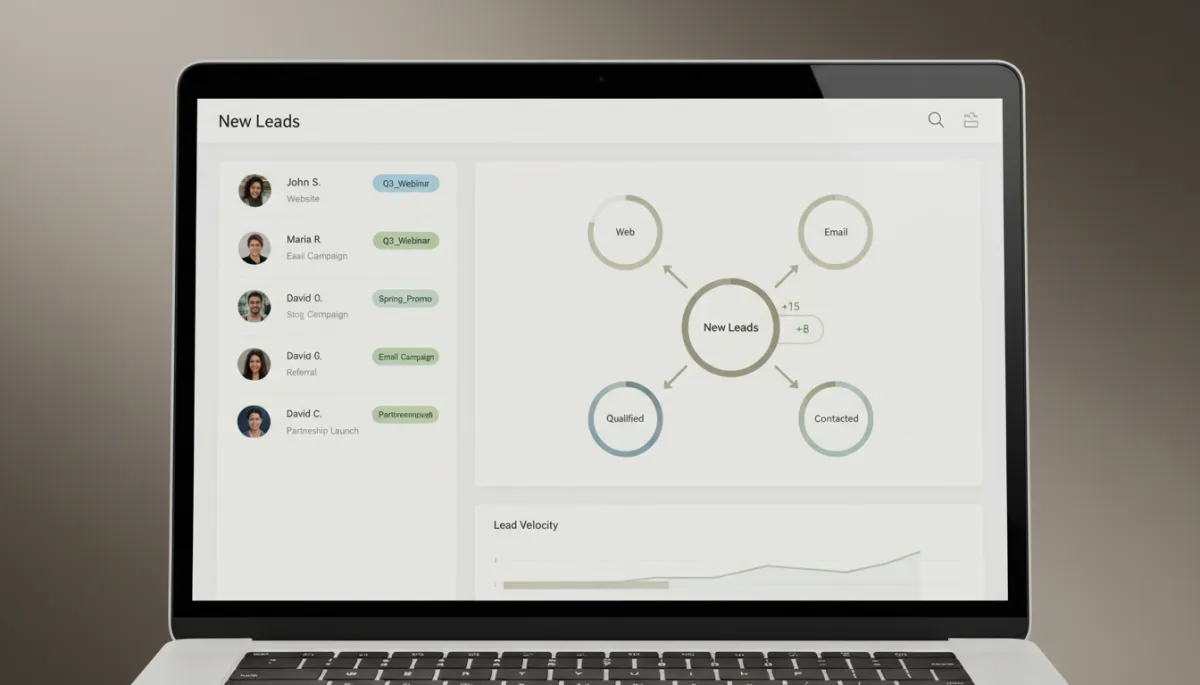
Clean, consistent data capture turns anonymous clicks into trackable sales opportunities.
To tighten this point in the HANDOFF Framework:
Ensure your landing pages load quickly, match the ad promise, and collect only the fields sales genuinely needs. Where supported, use qualifying questions to capture intent, timing, or budget — for example, following Google lead-form qualification guidance for eligible Search lead forms.
Implement proper conversion tracking and attribution —fr example, following the official Google Ads conversion tracking documentation—to connect interactions with valuable actions such as leads, calls, and sign-ups.
When using instant forms on social platforms, review Meta lead forms and CRM integration guidance to reliably send lead and downstream data to CRM via lead retrieval or Conversions API c
If your tools do not talk to each other, optional integration automation tools can connect forms, ad platforms, and your CRM — reducing manual exports, imports, and copy-paste errors when used thoughtfully and configured with appropriate safeguards.
5. Ownership and Routing — Every Lead Needs a Clear Owner From the Moment It Arrives
Every new inquiry should have a visible owner, response expectation, and next action. Many teams rely on shared inboxes, unmonitored spreadsheets, or informal Slack messages — which means leads are often “everyone’s job” and therefore no one’s priority. The break happens before the first call is even scheduled.
Route leads automatically by territory, product line, or channel, using an advanced CRM and automation system or a similar platform.
Assign clear SLAs (service-level expectations) — for example, “All new demo requests must receive a personal response within business hours,” without promising specific improvement percentages.
Use round-robin or rules-based assignment so every new inquiry instantly appears in one person’s queue, rather than getting buried in a group email.
All-in-one CRM platforms can centralize routing, calendars, and pipelines. The key is not just the software, but also the routing logic you design and maintain, and no software or workflow should be assumed compliant without appropriate legal and technical review.
6. First-Response Readiness — Be Ready When the Lead Is Paying Attention
Timely responses help preserve interest and create an earlier opportunity for a meaningful conversation. While the ideal response window varies by industry and process, the pattern is clear — long delays between inquiry and first contact make it harder to reach the lead and restart the buying conversation.
First-response readiness means your systems and people are prepared the moment a lead raises their hand:
Ensure inbound calls and form submissions route to the right person or team, with clear visibility into new inquiries and missed connections.
Implement an AI receptionist to handle missed calls and after-hours inquiries, so prospects can still ask questions, book appointments, or request follow-ups when your team is offline.
Send immediate confirmations via email or SMS, configured in accordance with applicable consent, identification, and unsubscribe requirements, clearly stating what happens next and when. Legal requirements can vary based on the type of message, consent, recipient, and circumstances, so your specific practices should be reviewed against current guidance.
⚠️ Compliance Note: When using email or SMS, align your consent practices with regulations such as Canadian commercial email and SMS consent requirements. Canadian businesses generally need consent before sending commercial messages and should retain records that demonstrate consent. Legal obligations can depend on message content, consent type, recipient, and context, and no software setup is automatically compliant without appropriate review. Clear permission protects both your brand and your deliverability.
7. Follow-Up Continuity — Nurture Until the Timing Is Right
Even with a strong first touch, many leads are not ready to buy immediately. A campaign can lose value when follow-up ends before the prospect is ready to decide. Inconsistent follow-up — scattered emails, manual reminders, forgotten callbacks — quietly drains ROI from otherwise solid marketing.
Map a multi-step nurture sequence across channels — email, SMS (where consent is valid), and retargeting ads — that educates, reassures, and re-invites the lead to take the next step.
Social-message automation tools can help capture and follow up with leads who start conversations in social DMs or comments, keeping the thread alive beyond the first message when used as part of a broader system and configured responsibly.
Track campaign parameters and sources using official analytics guidance — for example, UTM tagging best practices from Google Analytics, using consistent
utm_source,utm_medium, andutm_campaignValues to avoid fragmented reporting, so follow-up can reference the specific offer or content that sparked interest.
Pre-Sales Campaign Audit — Find Breaks Before You Launch
Before turning on spend, a structured pre-sales audit helps you catch handoff issues while they are still easy to fix. Walk through your campaign from the perspective of a new lead and review:
Audience: Are you targeting high-fit segments and excluding poor-fit ones, based on real sales feedback?
Message and offer: Does the ad speak to a specific problem and offer a realistic next step for this stage of the journey?
Landing page: Does the page load quickly, match the promise, and make the next step and expectations clear?
Capture: Are you collecting the right fields and qualification data so sales can prioritize and prepare?
Ownership: When a test lead is submitted, can you see exactly who owns it and what they should do next?
Response: How long does it actually take for a human or AI assistant to respond, and what does that response say?
Follow-up: If the lead does not book immediately, what automated and manual follow-up occurs, and for how long?
Measurement: Can you see which campaigns and messages generate not just leads, but qualified conversations and opportunities?
📌 Key Takeaway: A pre-sales audit turns the HANDOFF Framework into a checklist you can apply before you spend a dollar on ads — protecting budget and giving your sales team a clearer runway.
A Hypothetical Example: Two Similar Campaigns, Very Different Outcomes
Consider two businesses each running a new campaign that generates a similar number of leads:
Business A sends all leads to a shared inbox, has no clear owner, responds within a few days when time allows, and relies on one or two manual follow-up attempts. Sales sees “lots of leads,” but few meaningful conversations, and the campaign is labeled a failure.
Business B automatically routes each lead, includes campaign and qualification data, responds quickly with clear expectations, and runs a structured nurture sequence for anyone not ready to book. Sales sees fewer dead ends, more prepared conversations, and a clearer view of which campaigns drive real opportunities.
Both businesses invested similar budgets and generated similar lead counts — but their handoff systems determined how many of those leads became serious pipeline.
The LeadMagno Perspective — Systems That Protect Every Lead
LeadMagno’s perspective is that every campaign should have a visible, repeatable path from inquiry to sales conversation. At LeadMagno, we stand against lost leads, missed follow-ups, and scattered tools. Our marketing agency's view is that systems — not just ads — determine how consistently inquiries turn into qualified conversations.
LeadMagno can support the HANDOFF Framework — from capturing leads across channels to routing them intelligently and automating follow-up in line with your consent and compliance requirements. Actual capabilities, however, always depend on proper integrations, workflow design, channel selection, and account setup. The strongest results come when technology, strategy, and day-to-day execution are aligned, with clear source tracking, contact history, assigned ownership, next action, and reasons for loss visible in your system of record.
FAQs — Marketing-to-Sales Handoff and the HANDOFF Framework
What is a marketing-to-sales handoff?
A marketing-to-sales handoff is the process of moving a prospect from campaign engagement — an ad click, content download, or form submission — into a structured sales conversation. It includes how the lead is captured, what information is recorded, who owns it, how quickly they respond, and how follow-up is managed if the lead is not ready to buy immediately.
What information should sales receive with a lead?
At minimum, sales should see contact details, basic qualification fields (company, role, size, geography), the campaign and offer that generated the lead, any answers to qualifying questions, consent status for email and SMS, and a clear record of previous interactions. Additional context—such as pages viewed, content downloaded, or chat notes—can help tailor the first conversation.
Does every inquiry need immediate sales contact?
Not every inquiry requires a same-minute phone call, but every inquiry benefits from timely, appropriate follow-up. High-intent actions (demo requests, pricing questions) usually warrant faster human contact, while early-stage actions (newsletter sign-ups, top-of-funnel downloads) may be better served by automated education and lighter-touch outreach before a sales conversation is offered.
Can automation replace a sales conversation?
Automation can schedule, remind, qualify, and educate — but in most B2B and high-consideration B2C contexts, it should not be assumed to replace a thoughtful sales conversation. Instead, automation should prepare both sides for that conversation by capturing context, setting expectations, and ensuring the right person speaks to the right lead at the right time.
What should be measured before the first call?
Before the first call, focus on whether leads are moving reliably from inquiry to conversation. Useful pre-call metrics include: valid contact information, accurate capture of campaign source, time from submission to assignment, whether an acknowledgment was delivered, first-response time, appointment-booking rate, and the number of leads that remain unassigned. These indicators show whether your handoff system is supporting sales or allowing opportunities to stall.
How can small teams implement the HANDOFF Framework?
Small teams can start by documenting a simple, repeatable process for each HANDOFF element — even if one person wears multiple hats. Define your ideal audience, standardize your offers and calls-to-action, choose one primary capture and routing path, set clear response expectations, and build a basic nurture sequence. From there, use a marketing CRM such as LeadMagno to automate repetitive steps, maintain visibility, and keep every lead moving forward without adding unnecessary complexity.
Final Strategic Takeaway: Generating an inquiry is only the beginning. Campaign performance also depends on whether the lead is captured accurately, assigned clearly, acknowledged promptly, and followed through to a meaningful outcome.
Turn Your Next Campaign Into a Sales-Ready System
Campaigns rarely fail for a single reason — but they often underperform because the marketing-to-sales handoff is fragile. By tightening each element of the HANDOFF Framework — High-Fit Audience, Aligned Message and Offer, Next-Step Clarity, Destination and Data Capture, Ownership and Routing, First-Response Readiness, and Follow-Up Continuity — you give your sales team a genuine chance to succeed.
If you want to audit your current funnel, identify where leads are slipping away, and design a more resilient handoff, you can book a marketing-to-sales strategy session.


