
Is SEO Dead or Evolving in the AI Era?
SEO Evolution, AI Marketing, Digital Consultancy, Content Strategy, Lead Generation, Marketing Professionals
Is SEO Dead or Evolving in the AI Era?
AI has not killed SEO—it has raised the bar. For small and medium businesses, agencies, and performance-focused marketers, the real question is whether your search strategy has evolved from chasing rankings to owning answers, data, and demand.
Direct Answer: SEO Is Evolving into AEO and GEO
SEO is not dead—it's expanding into Answer Engine Optimization (AEO) and Generative Engine Optimization (GEO). With AI overviews and conversational search now influencing more than half of queries, visibility depends less on blue links and more on whether AI systems can trust, understand, and quote your brand. Traditional SEO fundamentals remain mandatory, but they are no longer sufficient on their own.
1. From Keywords to Topical Authority
AI models reward brands that demonstrate topical authority—deep, coherent coverage of a subject, not sporadic blog posts. That means building structured content clusters around core revenue topics like “lead generation systems,” “local visibility,” or “content strategy,” and interlinking them intelligently. A focused digital consultancy partner can help map those clusters to your actual offers and sales process, rather than chasing vanity keywords.
2. AEO and GEO: Being the Answer, Not Just the Result
In 2026, AI overviews and assistants often resolve the search without a click. That does not mean SEO is wasted; it means you must optimize to be the source AI cites. Practically, that involves:
Answer-first formatting—clear definitions, bullet summaries, and FAQs at the top of key pages.
Schema markup, consistent NAP data, and verified reviews to strengthen machine trust.
Author bylines and real expertise—AI systems increasingly favour human-led, attributable content.
For local and service businesses, platforms like the Local Visibility Operating System help operationalize GEO and AEO—aligning your content, listings, and reviews so AI assistants can confidently surface your brand in “near me” and intent-heavy queries.
3. Real-World Example: From Content Chaos to Lead Engine
Consider a regional B2B agency with scattered blog posts and inconsistent social activity. By consolidating topics into a structured content marketing strategy, implementing answer-first service pages, and integrating social proof through strategic social media marketing, they moved from unpredictable traffic to a consistent flow of qualified demo requests. AI overviews began citing their guides because they were clearly structured, locally relevant, and backed by reviews and case studies.
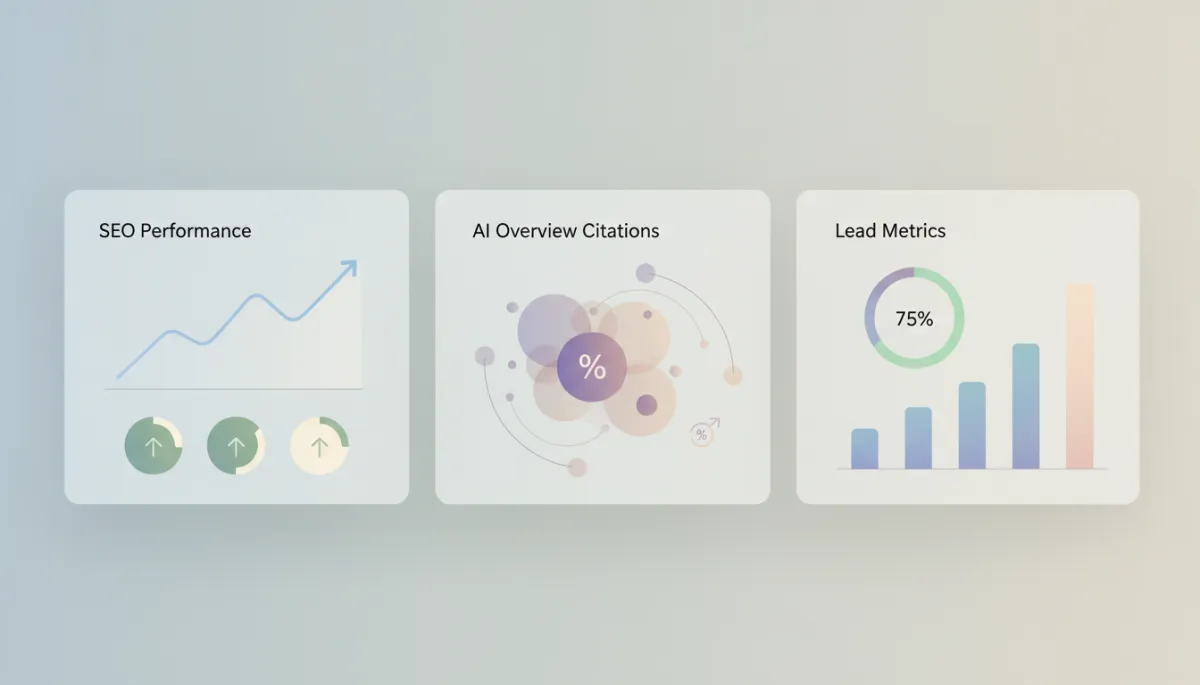
Structured, answer-first content often converts fewer visits into more qualified leads.
4. AI-Powered Tools—With Human Strategy on Top
Industry data shows domains with strong technical SEO and backlinks are up to 3.5× more likely to be cited in AI answers. Yet tooling alone does not create strategy. Platforms such as GoHighLevel—and its AI features, SaaS upgrade, and revenue-focused upgrades—excel when paired with a clear conversion architecture. Add MagnoPro for lead capture and nurturing, and you have an ecosystem where every AI-discovered visit is systematically turned into pipeline, not just traffic.
For teams that want guided implementation, programs like the HighLevel Bootcamp or a focused marketing strategy session accelerate adoption, reduce experimentation, and align SEO, AI, and CRM data around revenue.
5. Contrarian Insight: Stop Obsessing Over Traffic, Start Owning Intent
In an AI-first landscape, chasing raw organic sessions is a distraction. With zero-click searches rising, the more commercially intelligent move is to optimize for intent capture—being cited in AI answers, then routing those high-intent users into clear offers, demos, and consultations. Booking flows such as “Book a demo” journeys or content strategy sessions convert far better than generic “contact us” pages when paired with strong AEO content.
6. Quick FAQs for Decision-Makers
Is it still worth investing in SEO? Yes—provided it is integrated with AI search, CRM, and lead systems, not run as an isolated channel.
Where should we start? Audit topical authority, technical foundations, and conversion paths. Then prioritise AEO-ready pages tied to your highest-value offers.
How do we operationalize this? Combine a strategic partner—such as a specialised digital consultancy—with platforms like GoHighLevel Pro trials to test, measure, and refine quickly.
Final Strategic Takeaway
SEO in the AI era is no longer a checklist—it is an operating system for how your brand is understood, cited, and chosen. Businesses and agencies that win will deliberately build topical authority, design content for AEO and GEO, and connect discovery to robust lead-generation infrastructure. If your current approach cannot show how a new page, schema update, or AI feature will move pipeline, it is time to rethink the strategy, not abandon SEO. The opportunity has not disappeared—it has become more strategic, measurable, and valuable for those prepared to evolve.


